Caulophyllum thalictroides
Caulophyllum from Greek kaulos (stem) + phyllon (leaf), referring to the stem that appears to form a stalk for the single large compound leaf. thalictroides meaning 'resembling Thalictrum (meadow-rue),' whose leaves are similar.
Blue Cohosh
Berberidaceae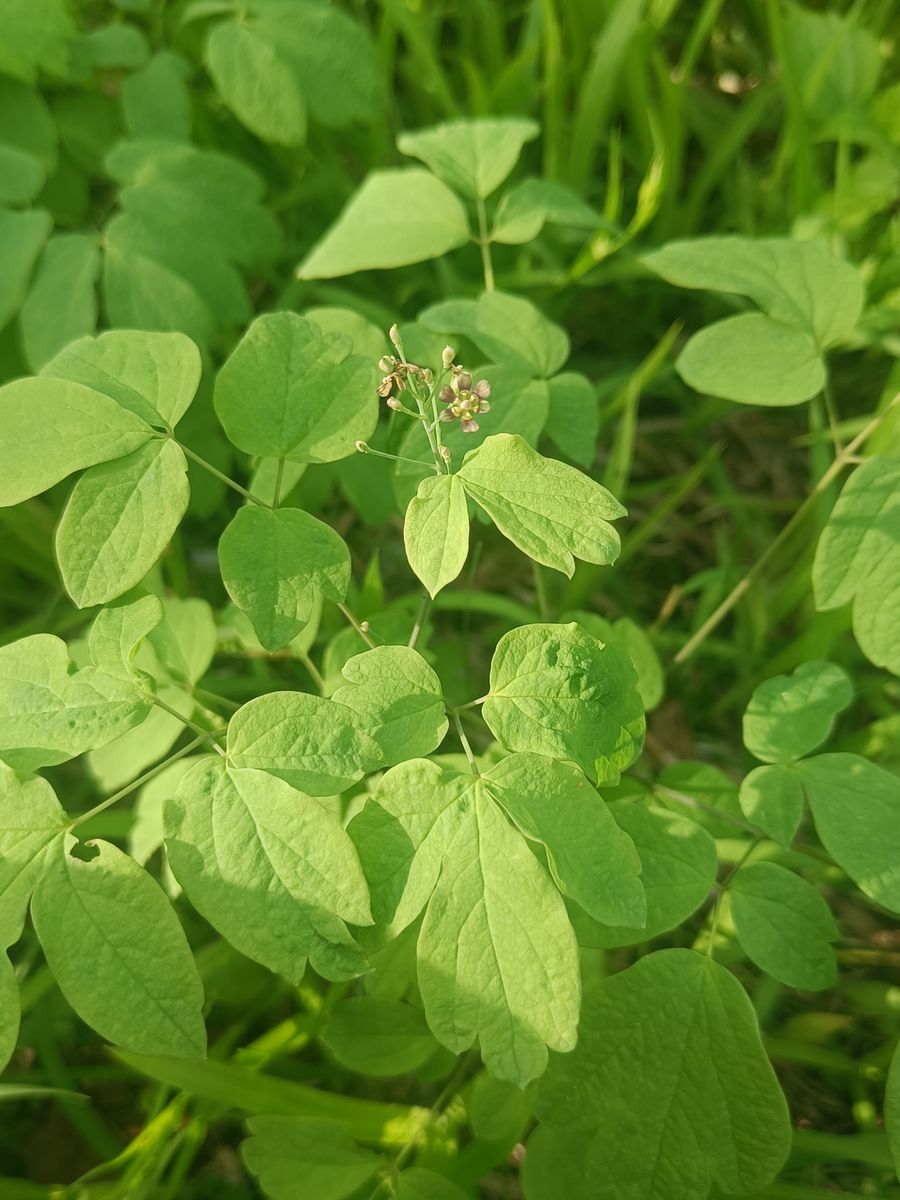
Distinguishing Features
- Glaucous blue-green foliage throughout; entire plant has a distinctive blue-grey waxy bloom
- Large bi- or triternately compound leaf; leaflets 2–3-lobed, resembling Thalictrum (meadow-rue)
- Small, inconspicuous yellowish-green to purple-brown flowers in a terminal cluster, appearing before leaves fully expand
- Fruit a dark blue berry-like naked seed (not a true berry — the seed coat becomes fleshy and dark blue, exposing the seed early)
- A single large cauline (stem) leaf clasps the stem below the terminal flower cluster
- Rhizomatous; forms colonies in rich forest soil; 40–80 cm tall at maturity
Habitat
Rich, moist deciduous forest understories, often in calcareous or base-rich soils; north-facing slopes, ravines, and floodplain forests. Indicator of old-growth or high-quality forest.
Notes
The blue 'berries' are botanically naked seeds with a fleshy blue seed coat — not true drupes or berries. All parts are toxic, especially the seeds and rhizome. Historically used medicinally by Indigenous peoples as a uterine stimulant; contraindicated in pregnancy. Indicator species for high-quality forest remnants.