Convallaria majalis
Convallaria from Latin convallis (valley), referencing the shaded valley habitats where it grows. majalis from Latin maius (May), meaning 'of May' — referring to its bloom time.
Lily of the Valley
Asparagaceae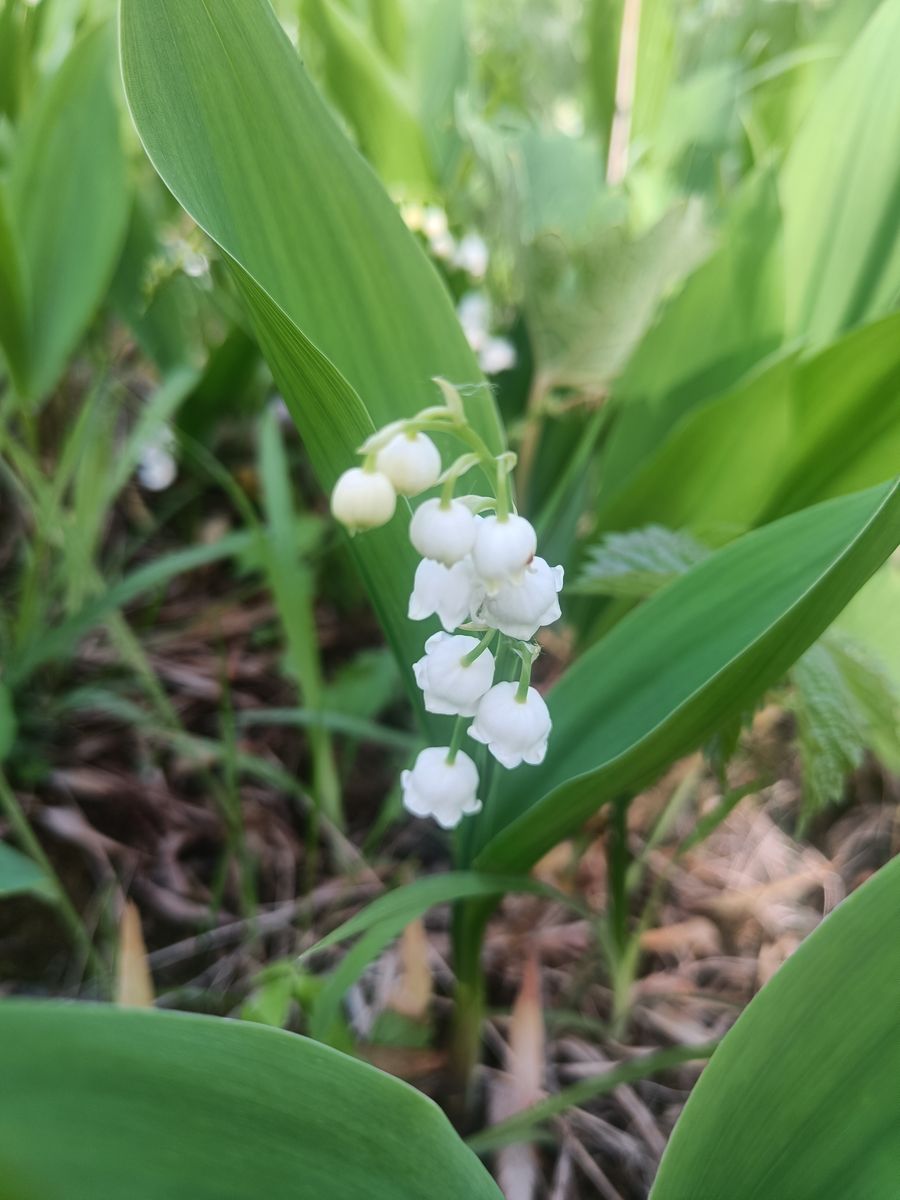
Distinguishing Features
- Two (rarely three) broad elliptic basal leaves, 15–25 cm long, with strongly parallel venation
- Flowers white (rarely pink), small, nodding, bell-shaped (urceolate), sweetly fragrant, arranged in a one-sided raceme on a leafless scape
- Fruit a round red-orange berry, 6–8 mm diameter
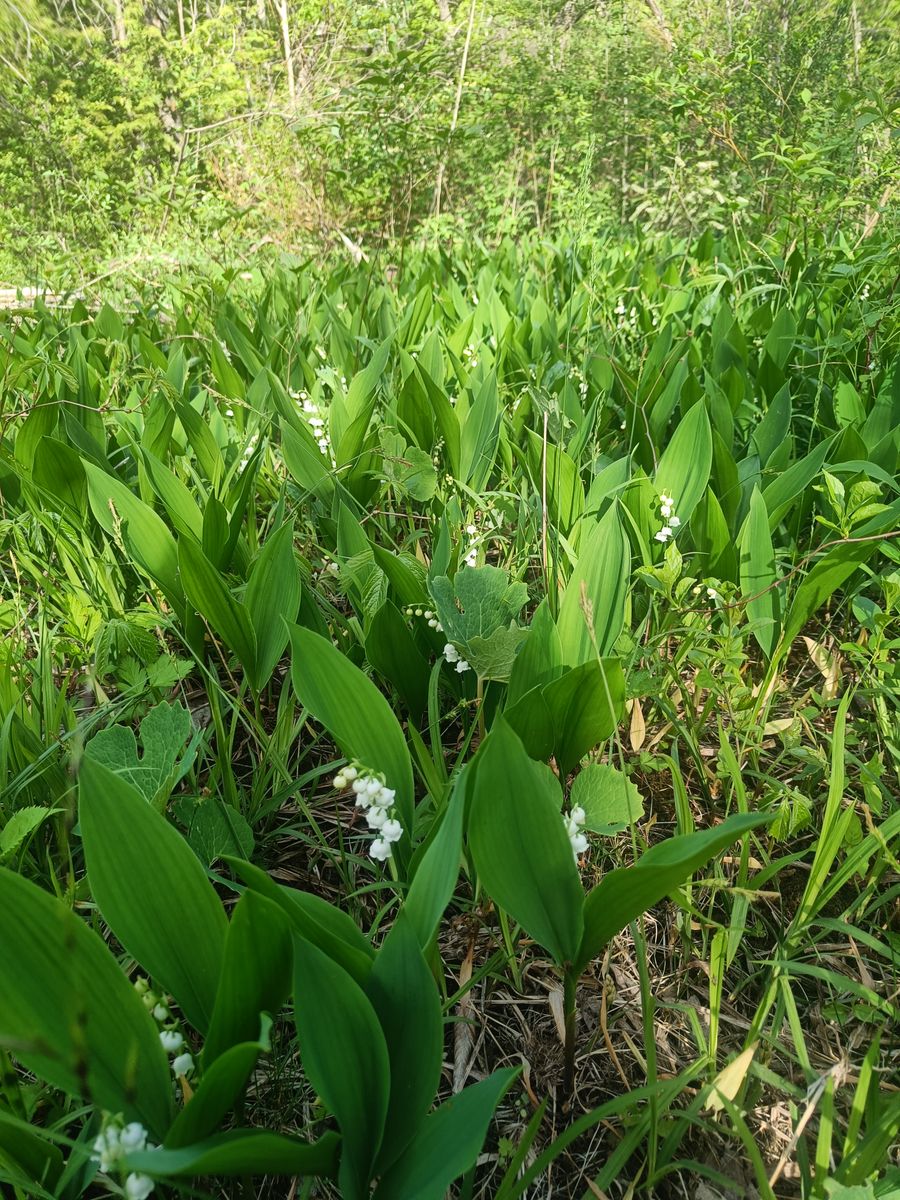
- Spreads aggressively by rhizomes to form dense mats that exclude other vegetation
- Petioles sheath the stem at the base
- All parts intensely poisonous — over 30 cardiac glycosides (convallatoxin, convallarin)
Habitat
Escaped from cultivation into forest edges, roadsides, disturbed woodlands, ravines, and shaded urban areas. Tolerates deep shade and poor soils. Naturalizes readily in Ontario and the Great Lakes region.
Notes
A beloved garden plant that becomes invasive outside of cultivation. Entire plant is highly toxic: cardiac glycosides can cause heart arrhythmias, and even water in a vase containing cut flowers can be toxic. Do not confuse with native wild garlic mustard or ramps. The red berries are especially dangerous as they attract children.