Cornus alternifolia
Cornus from Latin cornu (horn), referring to the hard, dense wood. alternifolia from Latin alternus (alternating) + folium (leaf) — the only dogwood with alternate rather than opposite leaves.
Pagoda Dogwood
Cornaceae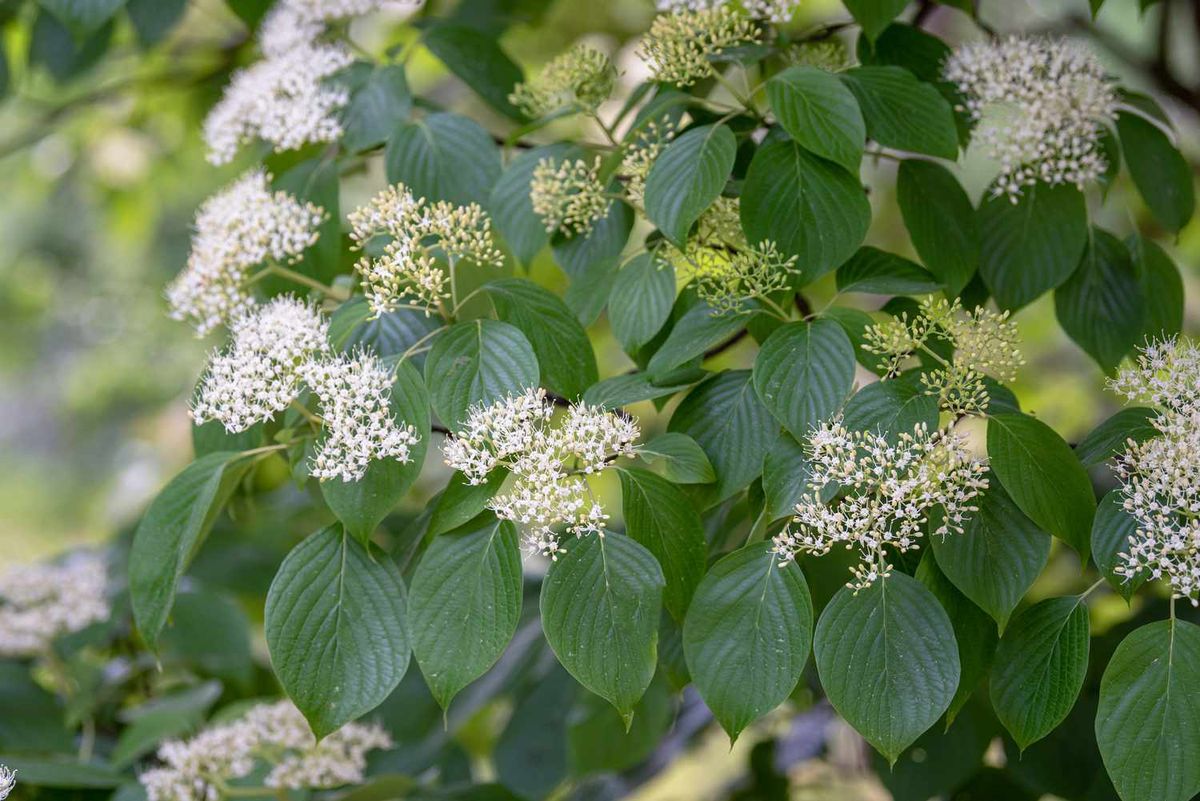
Distinguishing Features
- Alternate leaves (unlike most dogwoods which have opposite leaves) — key diagnostic feature
- Strongly tiered, horizontal branching pattern giving a pagoda-like silhouette
- Leaves clustered near branch tips, ovate with arcuate venation typical of dogwoods
- Small creamy-white flowers in flat-topped cymes, blooming May–June
- Drupes turn from green to red to blue-black at maturity, on bright red pedicels
- Bark on young stems reddish-green, turning grey-brown with age
- Multi-stemmed large shrub to small tree, typically 6–9 m tall
Habitat
Understory of moist to mesic deciduous and mixed forests; forest edges, stream banks, and rocky slopes. Tolerates shade but fruits best with more light.
Notes
One of the few dogwoods with alternate leaves — this is the most reliable identification character. The horizontal tiered branching is distinctive year-round. Fruits are an important food source for migratory birds. Attractive ornamental with four-season interest.