Eupatorium perfoliatum
Eupatorium named after Mithridates Eupator, King of Pontus (132–63 BC), who reportedly used a species as a medicinal antidote. perfoliatum from Latin per (through) + folium (leaf), describing how the stem appears to pierce through the fused leaf bases.
Common Boneset
Asteraceae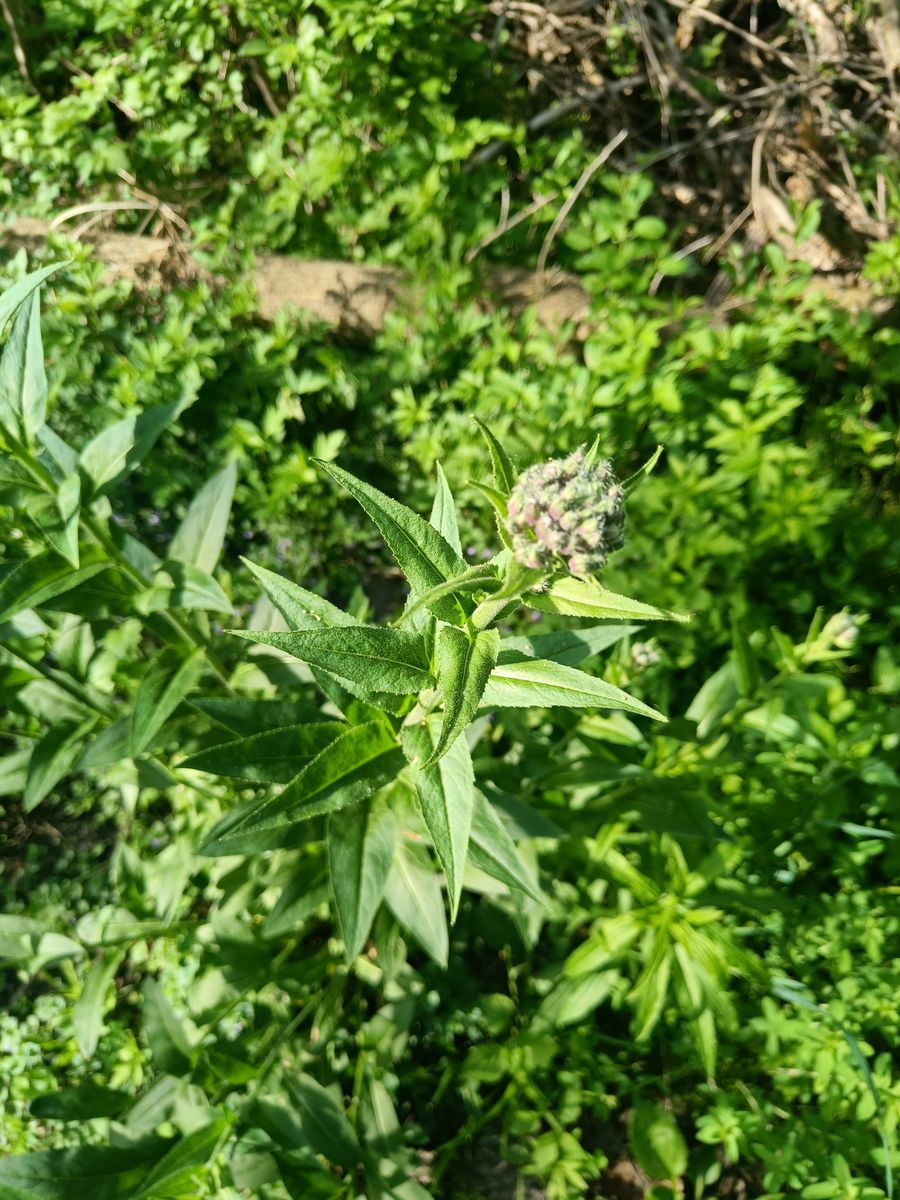
Distinguishing Features
- Leaves connate-perfoliate: opposite leaves fused at the base so the stem appears to pass through them (perfoliatum = through the leaf) — the key diagnostic feature
- Leaves lance-shaped, wrinkled, rough-hairy on upper surface, prominently veined, tapering to a long point
- Flowers white, tiny, in flat-topped corymbs; no ray florets, only disc florets; blooms mid to late summer
- Stem densely hairy (pilose), stout, erect, 60–120 cm tall
- Strong, somewhat medicinal odour when crushed
Habitat
Wet to moist habitats: marshes, swamp edges, stream banks, wet meadows, moist roadsides, and fens. Usually found at or near the water's edge.
Notes
The perfoliate leaves — appearing pierced by the stem — are unmistakable and give both the common and scientific name. Historically a major medicinal plant of Indigenous peoples and early settlers for treating febrile illness and influenza ('bone-break fever'); hence 'boneset.' Contains pyrrolizidine alkaloids; not recommended for internal use. Excellent pollinator plant, attracting many bee and butterfly species.