Lonicera morrowii
Lonicera named after Adam Lonicer (1528–1586), a German physician and botanist. morrowii named after James Morrow (1820–1865), an American botanist who collected plants in Japan during Commodore Perry's expedition.
Morrow's Honeysuckle
Caprifoliaceae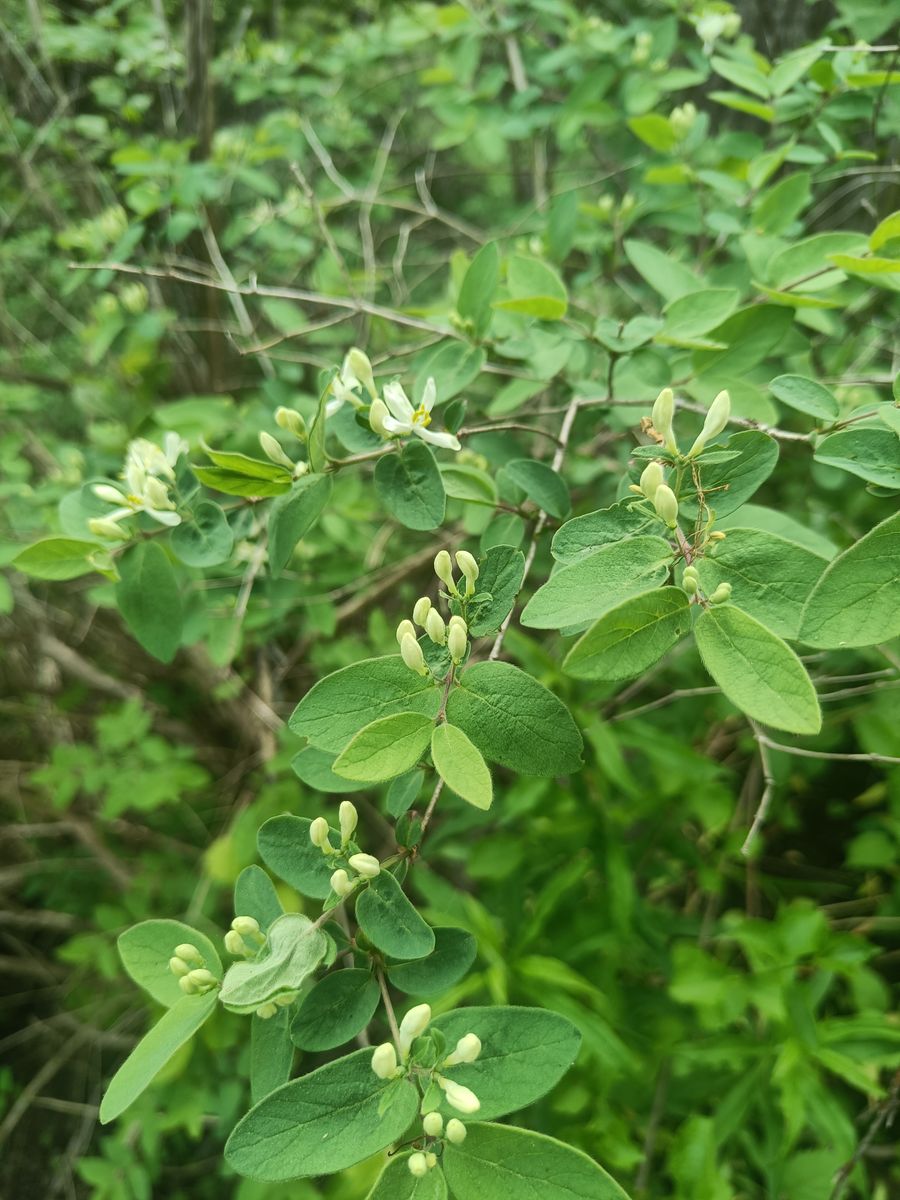
Distinguishing Features
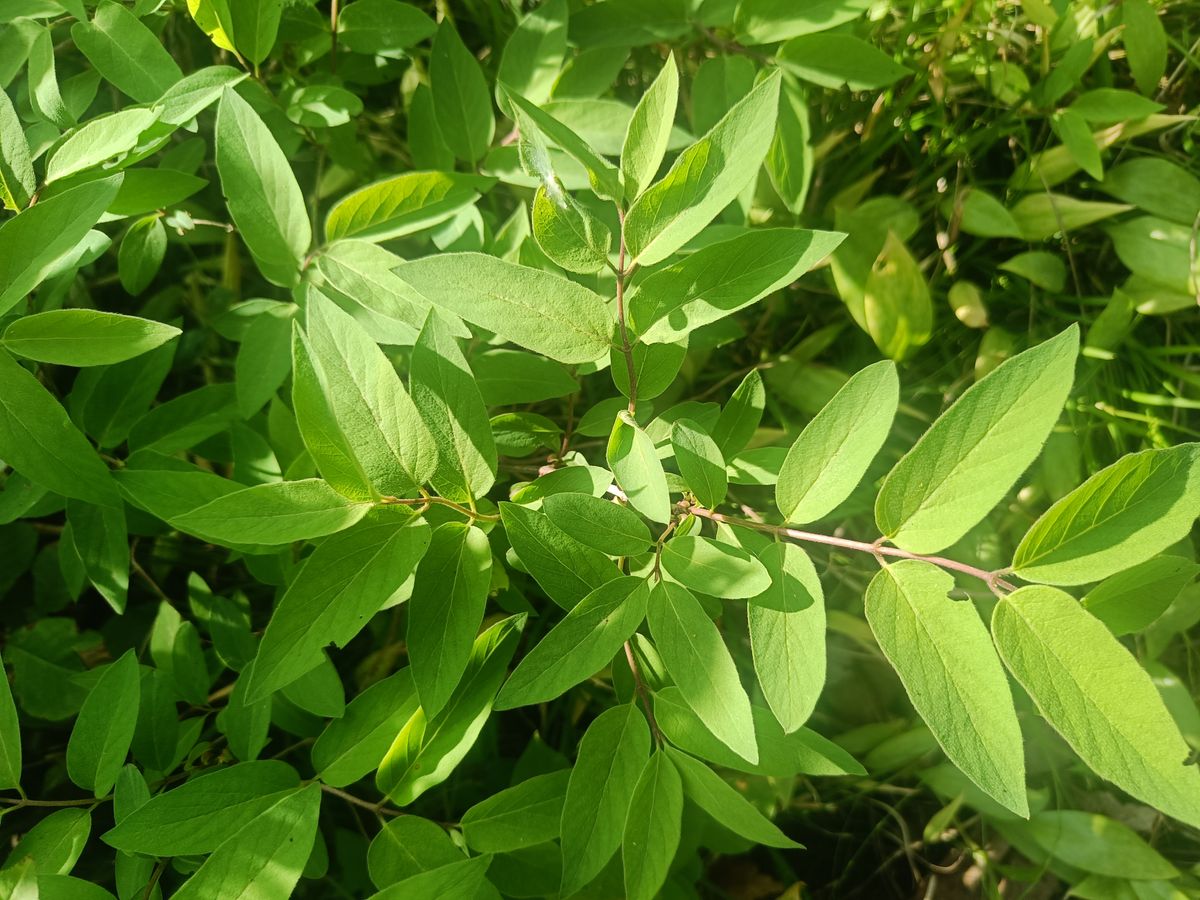
- Opposite, elliptic to oblong leaves, densely hairy (pubescent) on both surfaces — hairiness distinguishes it from L. tatarica
- Flowers paired at leaf axils, white aging to yellow, two-lipped; fragrant
- Fruit: paired dark red to red-orange berries on short stalks
- Hollow pith in twigs — shared with all invasive bush honeysuckles
- Leafs out very early in spring and retains leaves into late fall, out-competing native plants
- Spreading multi-stemmed shrub, 1.5–2.5 m tall, with arching to spreading branches
- Hybridizes readily with L. tatarica to form L. ×bella (Bell's Honeysuckle)
Habitat
Old fields, roadsides, forest edges, disturbed woodlands, and thickets. Less shade-tolerant than L. tatarica. Common in southern Ontario and the Great Lakes region.
Notes
Very similar to L. tatarica but distinguished by hairy leaves and white-to-yellow flowers (vs. pink to white). Hybridizes with L. tatarica producing Bell's Honeysuckle (L. ×bella). All invasive bush honeysuckles disrupt native plant communities through early leaf-out shading and prolific bird-dispersed seed production.