Lonicera tatarica
Lonicera named after Adam Lonicer (1528–1586), a German physician and botanist. tatarica from Tataria (Tartary), the Central Asian region where the species originates.
Tatarian Honeysuckle
Caprifoliaceae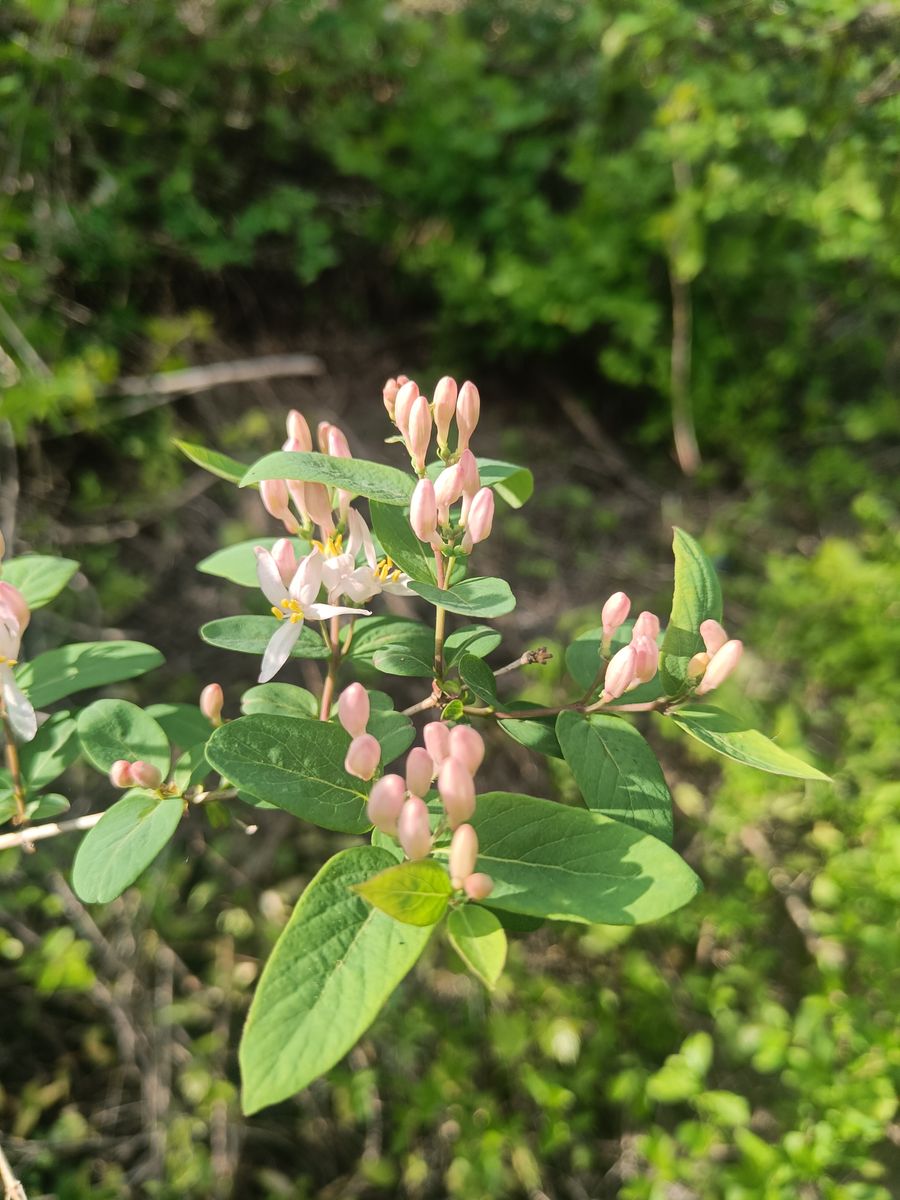
Distinguishing Features
- Opposite, ovate to oblong-ovate leaves, blue-green, hairless, with cordate to rounded base
- Flowers paired at leaf axils, pink to white (sometimes deep rose), two-lipped, tubular
- Fruit: paired bright red to orange-red translucent berries, each berry with its own stalk
- Hollow pith in twigs — a key diagnostic for invasive bush honeysuckles
- Leafs out very early in spring (often weeks before native shrubs) and holds leaves late into fall
- Upright multi-stemmed shrub, 2–3 m tall, with arching branches
- Bark of older stems grey-brown, exfoliating in strips
Habitat
Roadsides, forest edges, old fields, disturbed woodlands, thickets, and hedgerows. Thrives in full sun to partial shade on a wide range of soils. Spreads aggressively from bird-dispersed seed.
Notes
One of several invasive bush honeysuckles in eastern North America alongside L. morrowii and L. maackii. Early leaf-out creates a 'green tunnel' effect that shades out native understory plants. Berries mildly toxic to humans. Very difficult to eradicate once established; forms dense thickets.