Maianthemum racemosum
Maianthemum from Greek Maios (May) + anthemon (flower), meaning 'May flower.' racemosum from Latin racemus (cluster of grapes), referring to the branched flower cluster.
False Solomon's Seal
Asparagaceae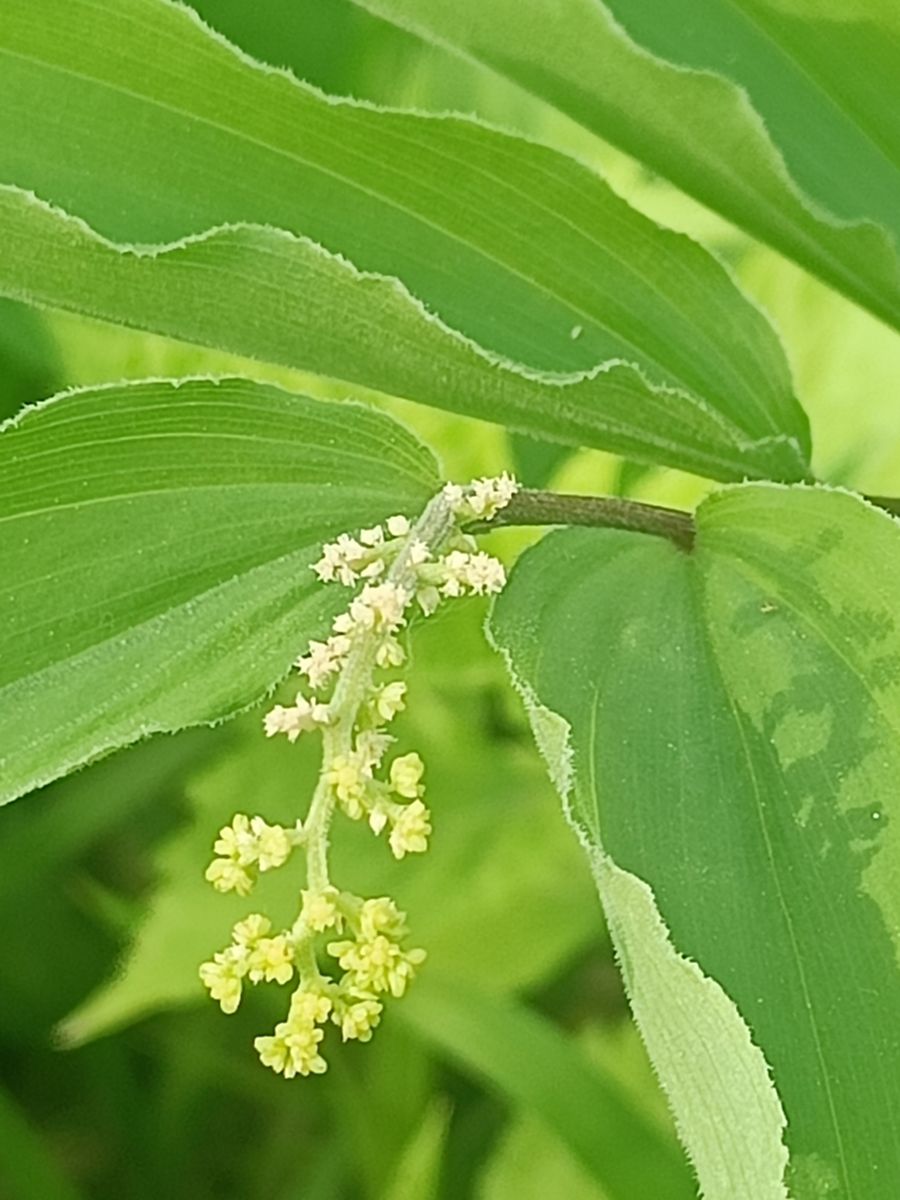
Distinguishing Features
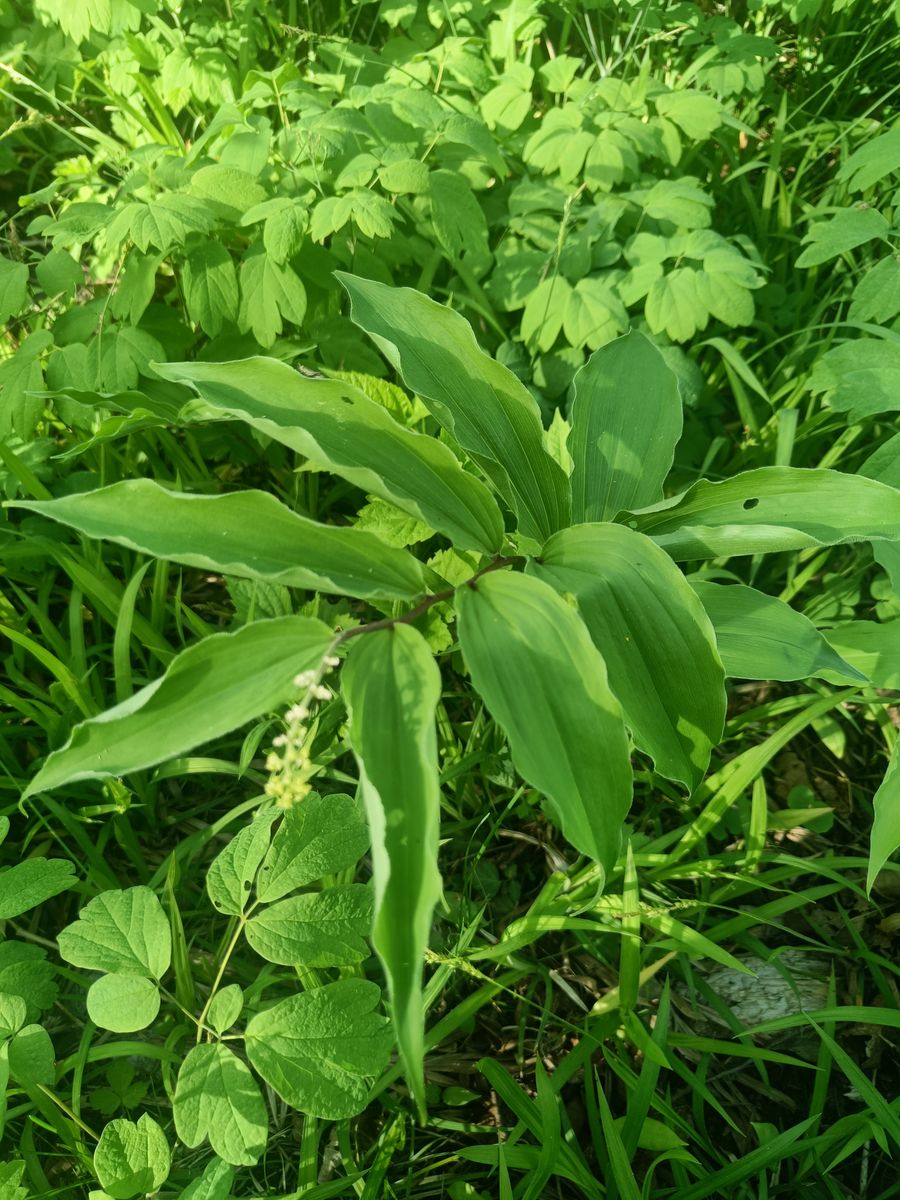
- Unbranched arching stem with alternate, sessile or clasping ovate leaves with parallel venation
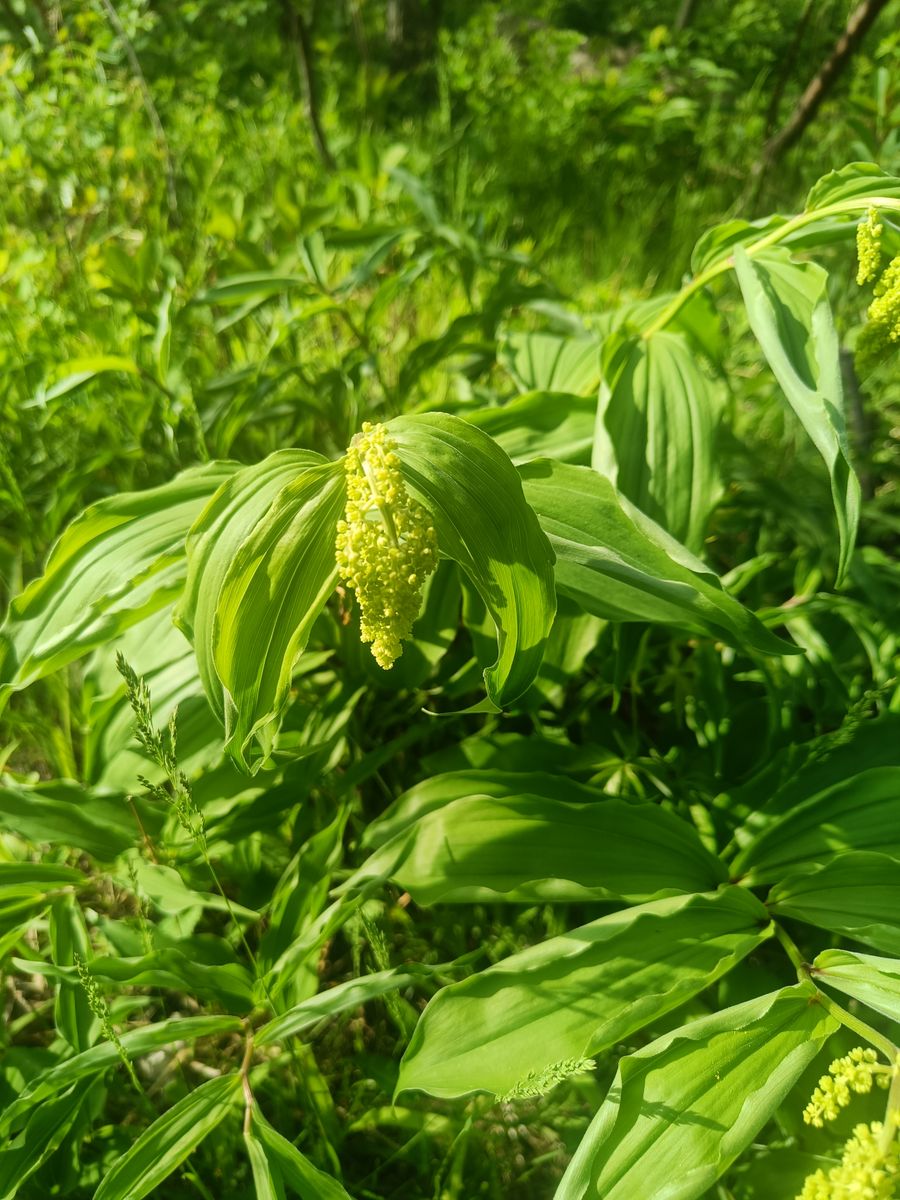
- Flowers white and tiny, borne in a large terminal plume-like panicle (raceme) — terminal position distinguishes it from true Solomon's Seal
- Berries ripen from green to speckled red-and-white, then to ruby red in late summer
- Leaves prominently parallel-veined, slightly hairy on undersurface, 7–15 cm long
- Rhizomatous; often forms colonies of arching stems 40–90 cm tall
- True Solomon's Seal (Polygonatum) has axillary drooping flowers and blue-black fruit — key distinction
Habitat
Moist to mesic deciduous and mixed forest understories; also forested slopes, ravines, and stream banks. Requires partial to full shade.
Notes
Also known as Solomon's Plume. The large terminal flower cluster is the clearest distinction from true Solomon's Seal (Polygonatum spp.), which has small flowers hanging from leaf axils. Berries are edible when ripe but can cause diarrhea in large quantities. Young shoots were eaten by Indigenous peoples. A classic woodland wildflower.