Parthenocissus quinquefolia
Parthenocissus from Greek parthenos (virgin) + kissos (ivy), meaning 'virgin ivy' — a Latinization of 'Virginia creeper.' quinquefolia from Latin quinque (five) + folium (leaf), referring to the five leaflets per compound leaf.
Virginia Creeper
Vitaceae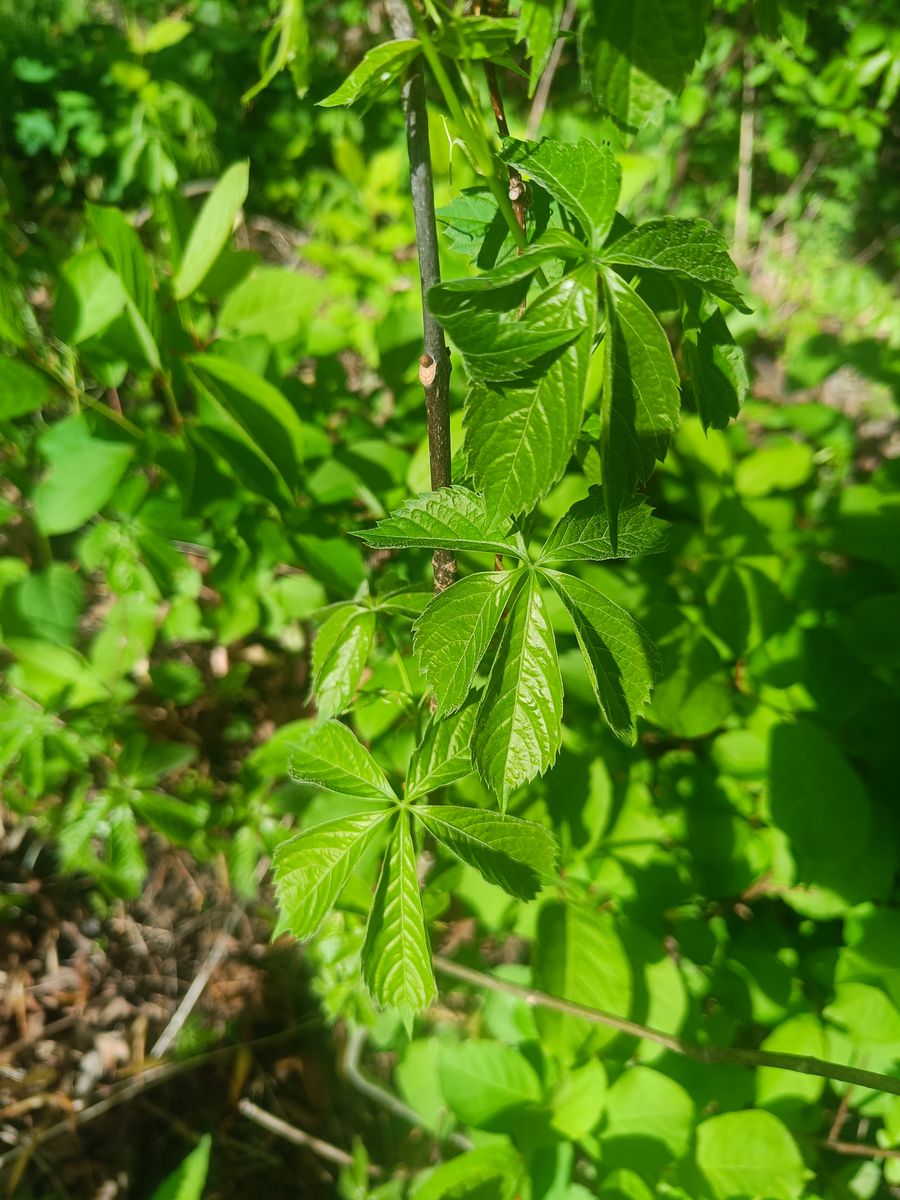
Distinguishing Features
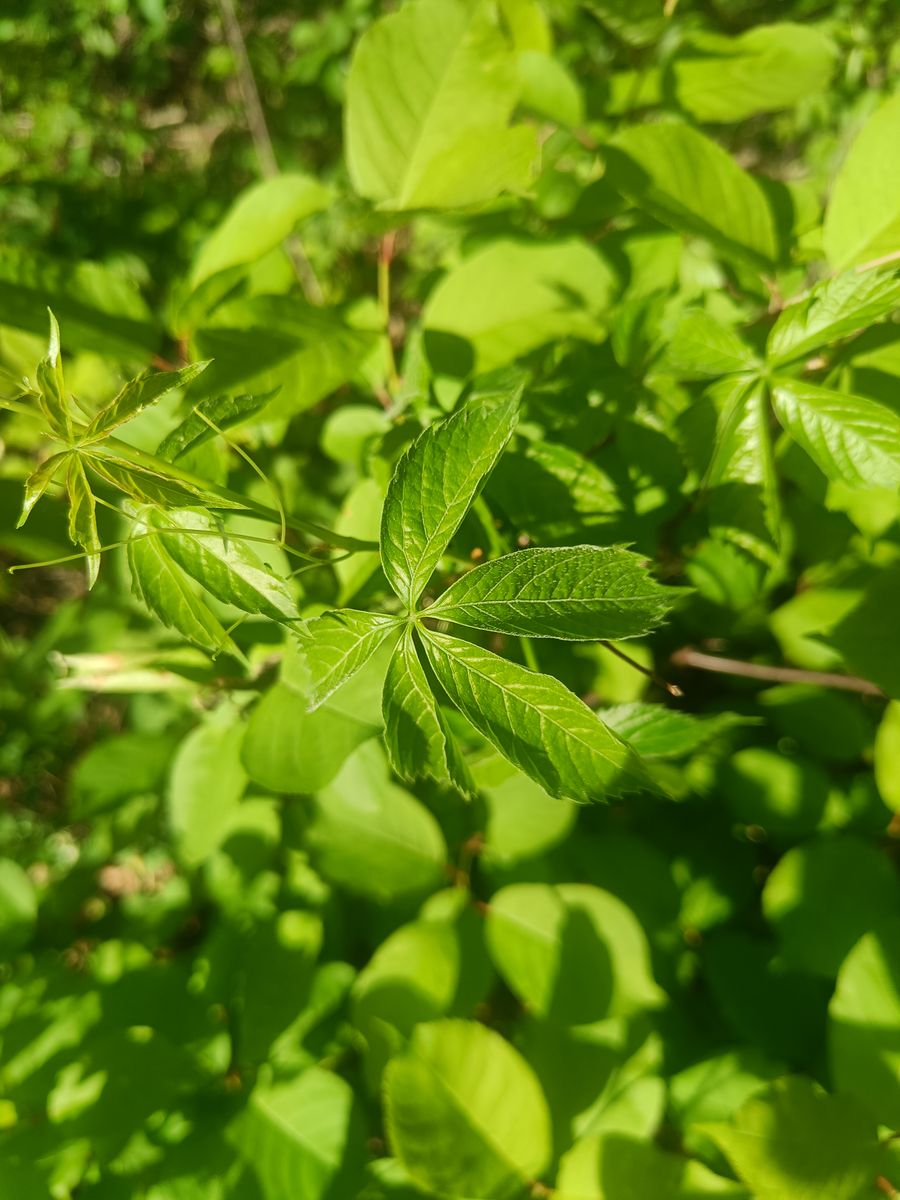
- Palmately compound leaves with 5 leaflets (occasionally 3 or 7), each leaflet coarsely toothed
- Tendrils end in adhesive discs that cling firmly to surfaces without mechanical support
- Small blue-black berries in loose clusters on bright red stalks in autumn
- Spectacular scarlet-to-crimson fall colour, often the first woody plant to turn
- Climbs by tendrils with adhesive pads; can scale smooth vertical surfaces
- Bark of older stems with shallow furrows; lenticels visible on young stems
Habitat
Highly adaptable — deciduous and mixed forests, forest edges, thickets, riverbanks, roadsides, disturbed areas, and urban settings. Climbs trees, shrubs, fences, and buildings.
Notes
Often confused with poison ivy (Toxicodendron radicans), which has 3 leaflets; Virginia Creeper consistently has 5. Berries are toxic to humans but eaten by many bird species. Tendrils with adhesive pads (not aerial rootlets) distinguish it from other climbers. A vigorous grower that can smother small trees.