Prunus virginiana
Prunus from Latin prunus (plum tree), from Greek proune. virginiana from Virginia, where the species was first described by European botanists.
Chokecherry
Rosaceae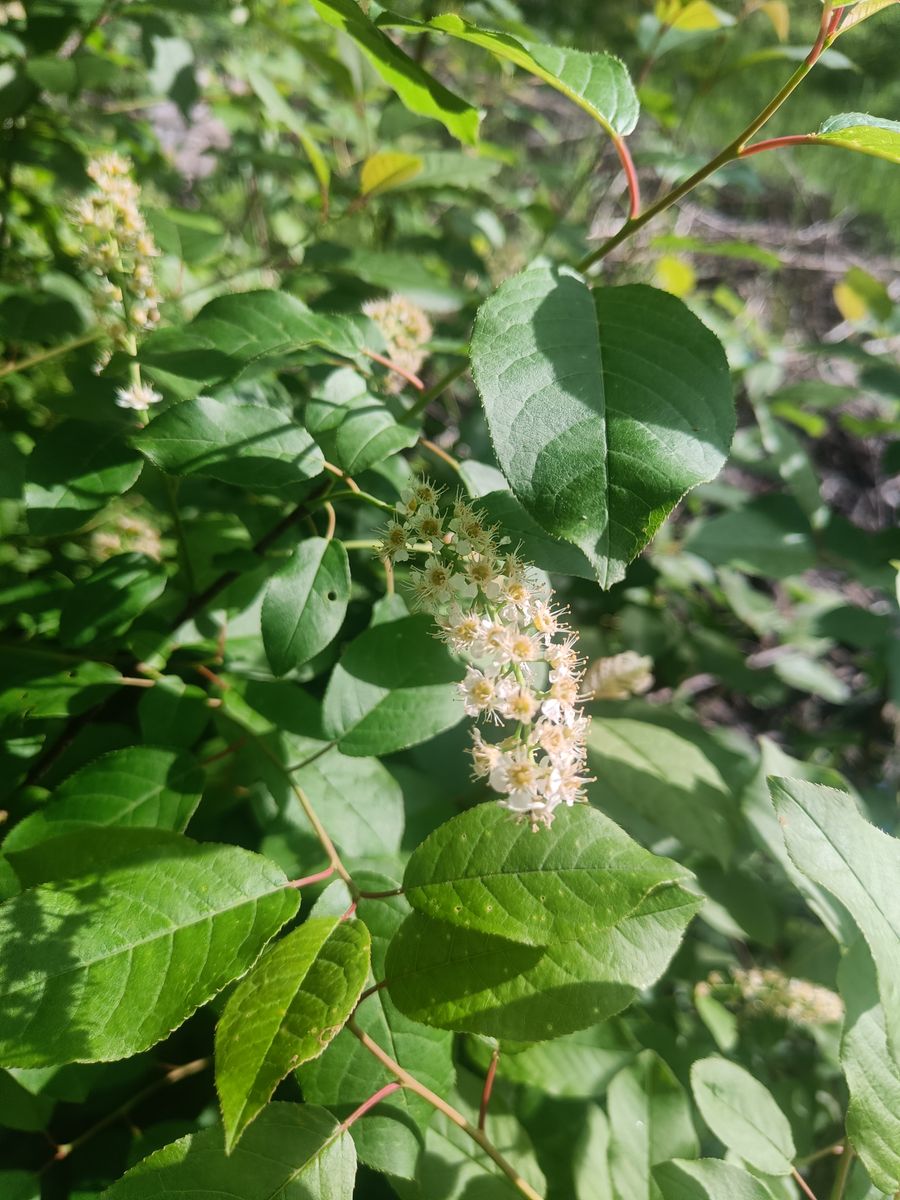
Distinguishing Features
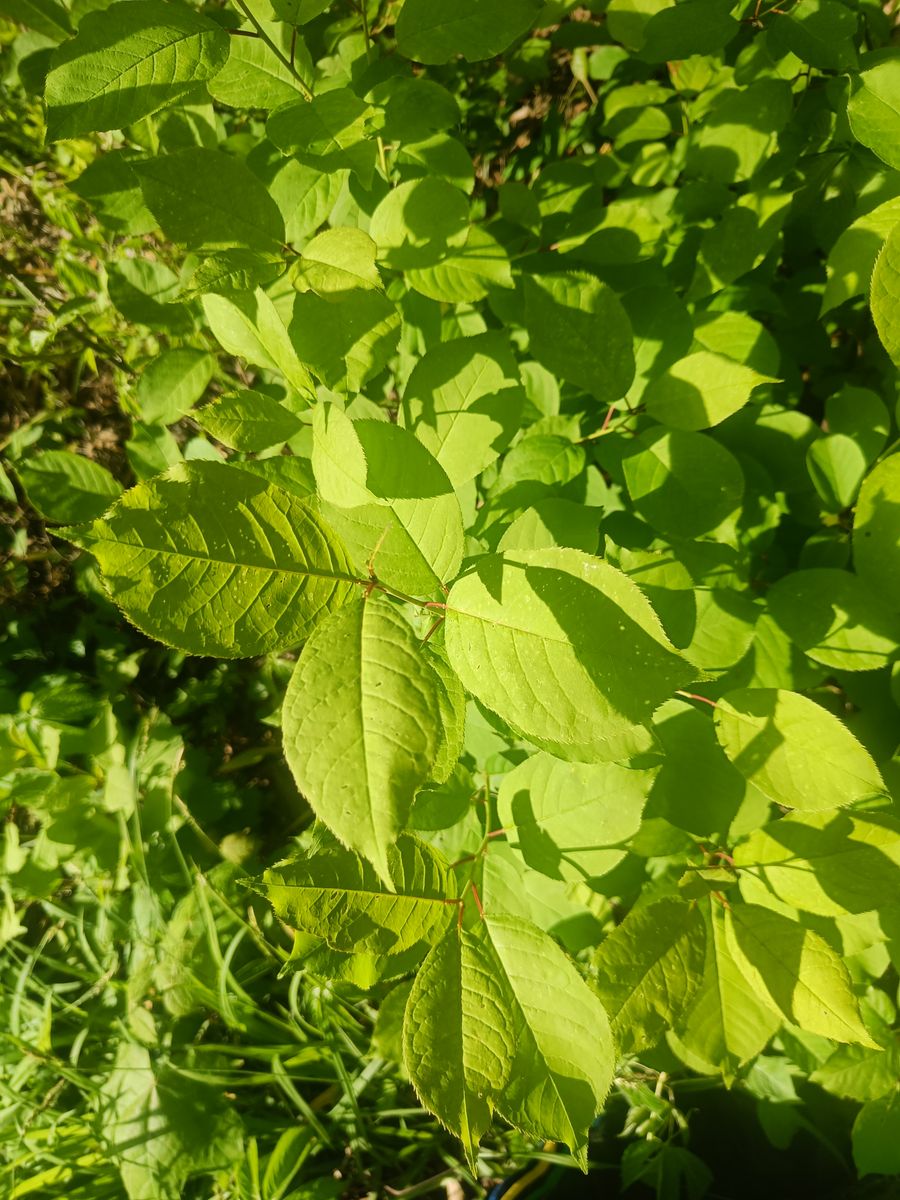
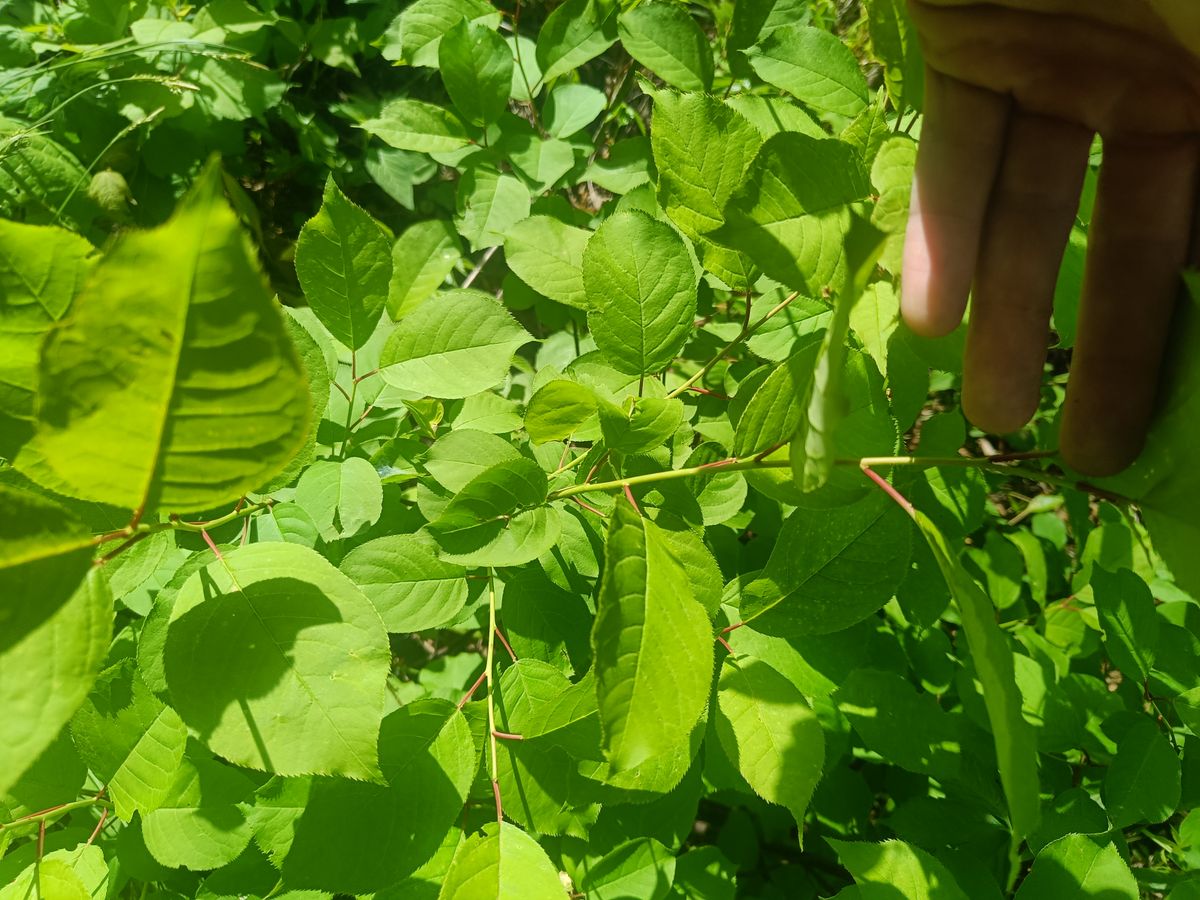
- Leaves ovate to obovate, finely and sharply serrate, with 2 glands at the junction of blade and petiole
- Flowers white, 5-petalled, in elongated cylindrical racemes 6–15 cm long (racemose inflorescence distinguishes it from other native cherries)
- Fruit small (6–9 mm), cherry-like drupes ripening from red to dark purple-black, very astringent when raw
- Bark dark grey to reddish-brown with horizontal lenticels; strong bitter almond (HCN) odour when scratched
- Large shrub to small tree, typically 3–8 m; often forms dense thickets via root sprouting
- Leaves may droop and wilt in heat but recover; wilted leaves produce higher concentrations of prussic acid (HCN)
Habitat
Forest edges, thickets, roadsides, disturbed areas, riverbanks, lakeshores, and open woodlands. Adaptable to a wide range of soil moisture and pH conditions.
Notes
Fruits are astringent raw but excellent for jams, jellies, syrups, and wine after cooking and straining out seeds. Seeds, bark, and wilted leaves contain amygdalin which releases hydrogen cyanide — toxic to livestock and potentially humans. Important wildlife plant: fruits consumed by dozens of bird and mammal species.