Toxicodendron pubescens
Toxicodendron from Greek toxikon (poison) + dendron (tree), meaning 'poison tree.' pubescens from Latin pubescens (becoming hairy, downy), referring to the densely hairy leaf surfaces and stems.
Atlantic Poison Oak
Anacardiaceae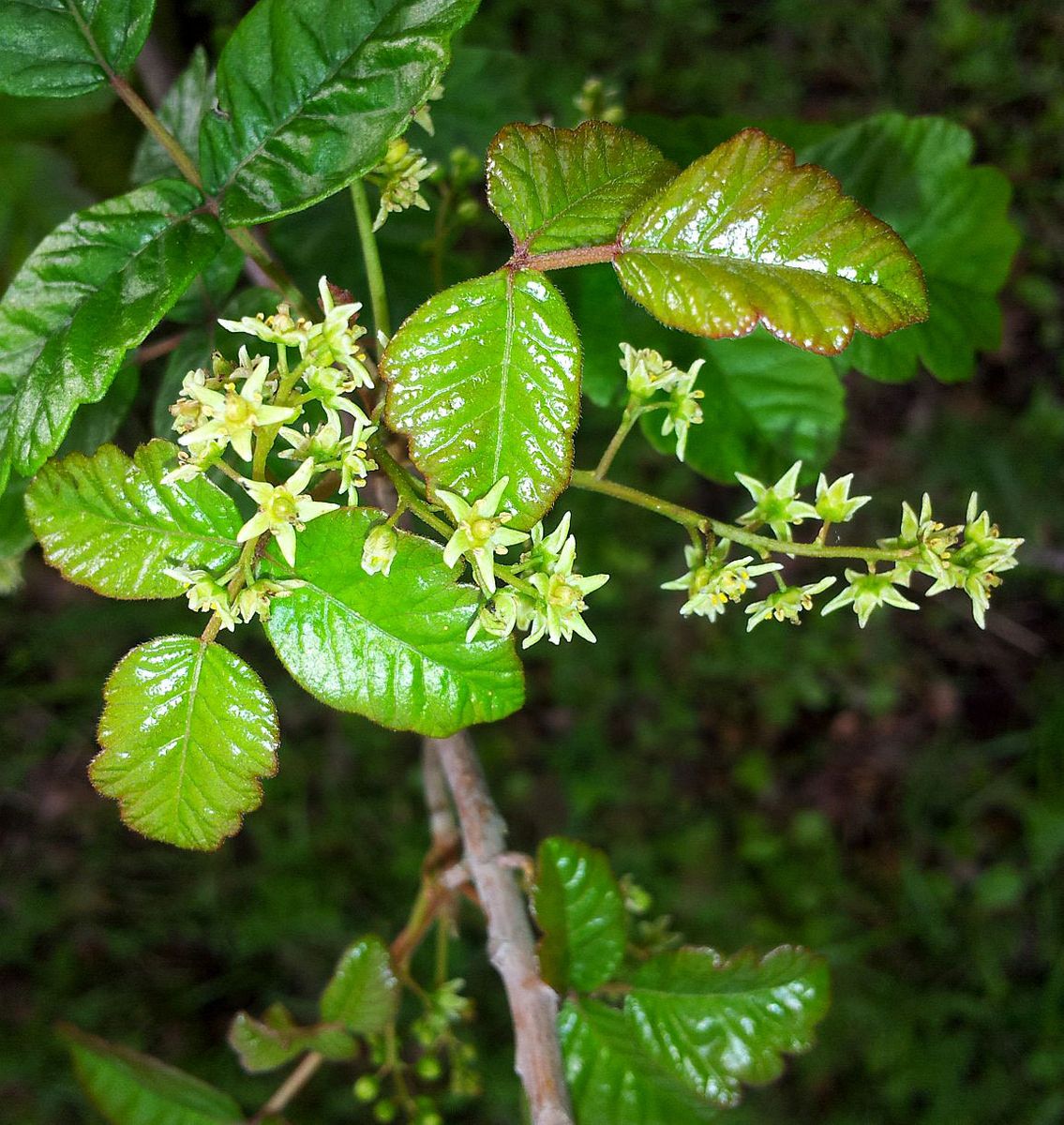
Distinguishing Features
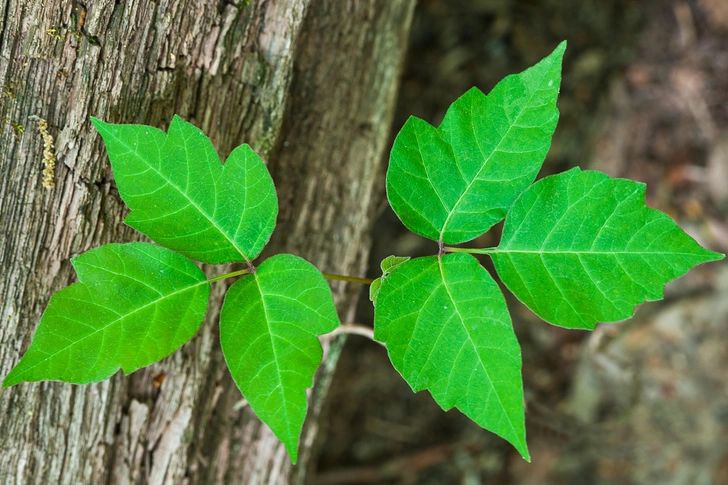
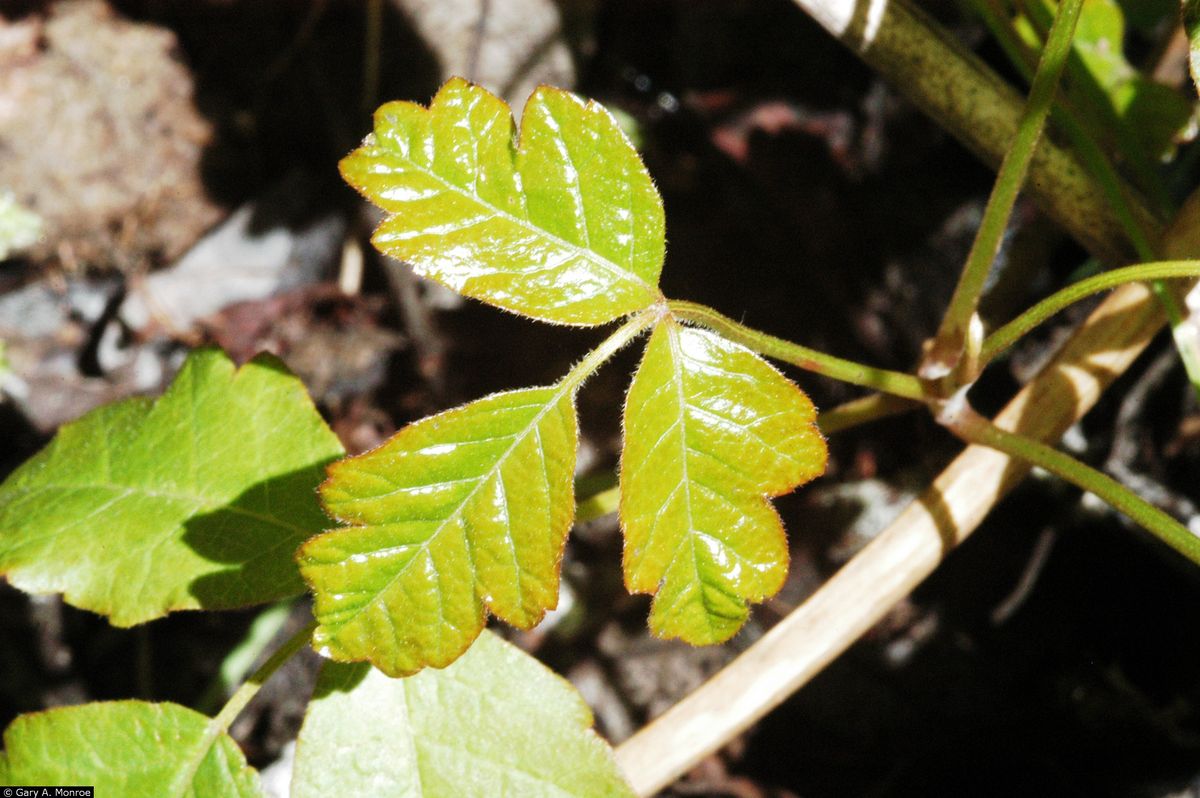
- Trifoliate leaves with oak-like leaflets — margins coarsely toothed or with 2–4 blunt lobes per side
- Terminal leaflet long-stalked and ovate to obovate (4–8 cm); lateral leaflets nearly sessile
- Young twigs and petioles densely pubescent (hairy) — key distinction from poison ivy
- Low-growing rhizomatous shrub, typically 0.5–1 m tall (does not climb like poison ivy)
- Small yellowish flowers in axillary panicles
- Yellowish-white pubescent drupes, about 5 mm diameter
- Leaves turn red in fall
Habitat
Dry barrens, pine woodlands, oak woods, sandy roadsides. Largely confined to sandy, low-fertility soils of the Atlantic and Gulf coastal plains.
Notes
Contains urushiol like all Toxicodendron species — causes contact dermatitis. Distinguished from poison ivy by its shrubby non-climbing habit, pubescent stems, and more distinctly oak-lobed leaflets. Less common in Ontario than T. radicans. Sometimes confused with fragrant sumac (Rhus aromatica), which has a similar growth form but terminal leaflet is sessile or short-stalked.