Toxicodendron radicans
Toxicodendron from Greek toxikon (poison) + dendron (tree), meaning 'poison tree.' radicans from Latin radicans (rooting), referring to the aerial rootlets used for climbing.
Eastern Poison Ivy
Anacardiaceae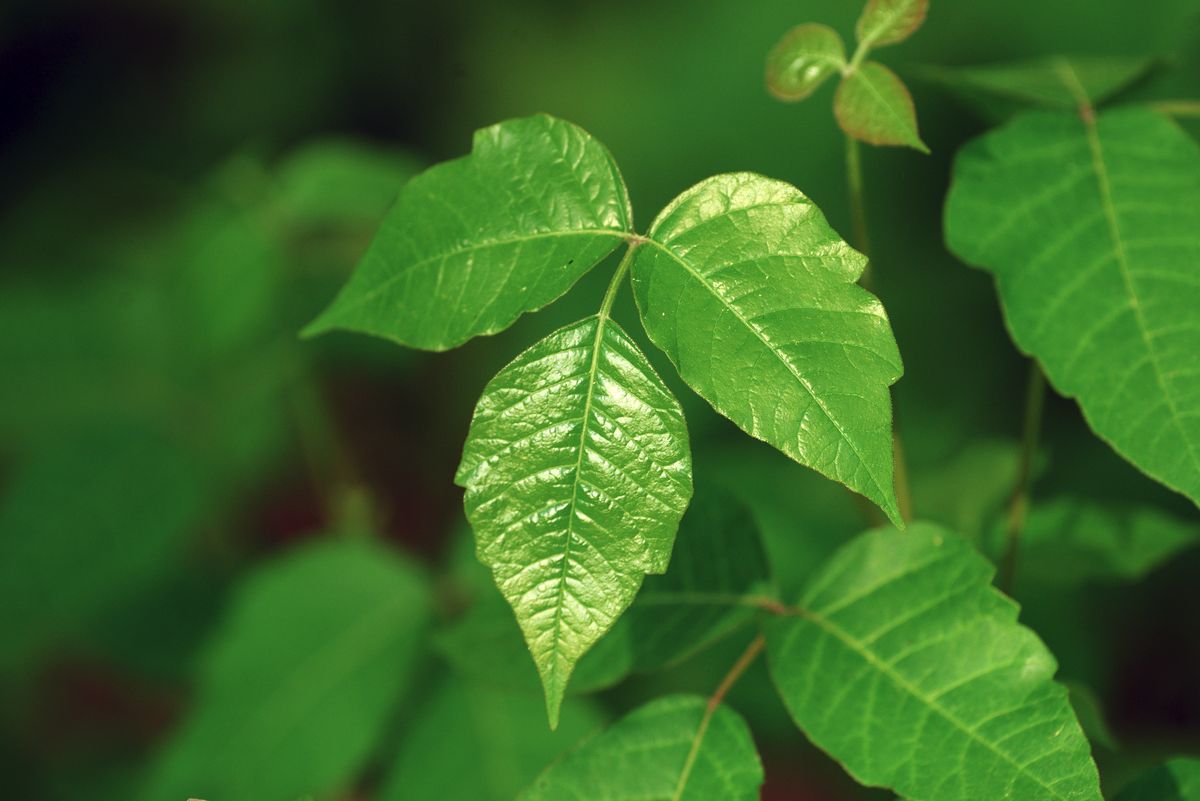
Distinguishing Features
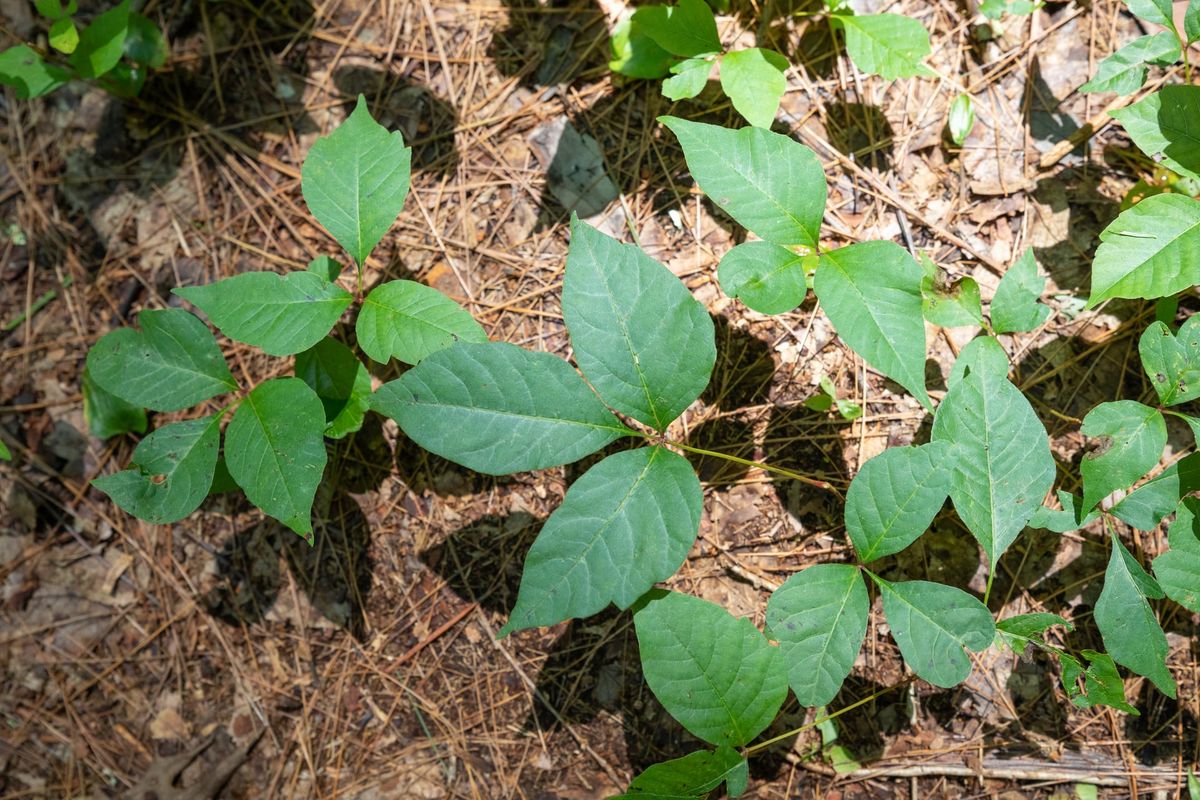
- Trifoliate leaves — 'leaves of three, let it be'
- Terminal leaflet has a longer stalk than the two lateral leaflets
- Leaflet margins variable: entire, toothed, or lobed (often asymmetric)
- Leaves glossy and reddish when young, turning green in summer, brilliant red/orange in fall
- Woody vine climbing via abundant aerial rootlets (hairy rope appearance on bark)
- Small greenish-white flowers in axillary panicles (May–June)
- White to yellowish waxy drupes in clusters, persisting into winter
- All parts exude urushiol — clear resin that causes contact dermatitis
Habitat
Forest edges, disturbed woodlands, fence rows, roadsides, riverbanks. Tolerates sun to deep shade. Thrives in a wide range of soil conditions.
Notes
Contact with any part (leaves, stems, roots, even dead vines) causes urushiol-induced dermatitis in most people. Urushiol remains active on surfaces for years. Smoke from burning poison ivy can cause lung irritation. Fruits are an important winter food source for birds. Often confused with Virginia creeper (5 leaflets) or box elder seedlings (opposite leaves).