Toxicodendron vernix
Toxicodendron from Greek toxikon (poison) + dendron (tree), meaning 'poison tree.' vernix from Latin vernix (varnish), referring to the glossy, lacquer-like sap — related to the Japanese lacquer tree (T. vernicifluum) in the same genus.
Poison Sumac
Anacardiaceae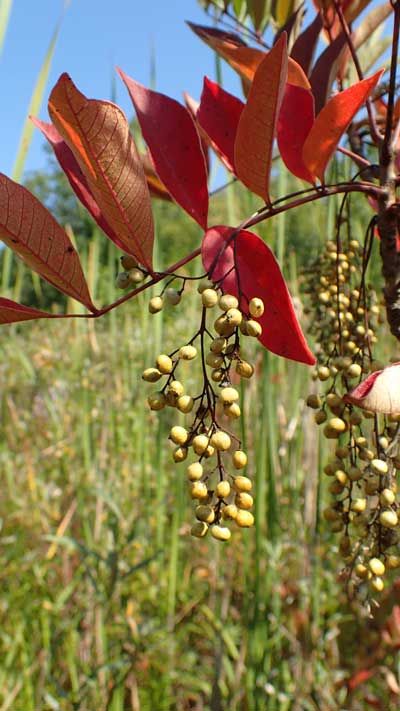
Distinguishing Features
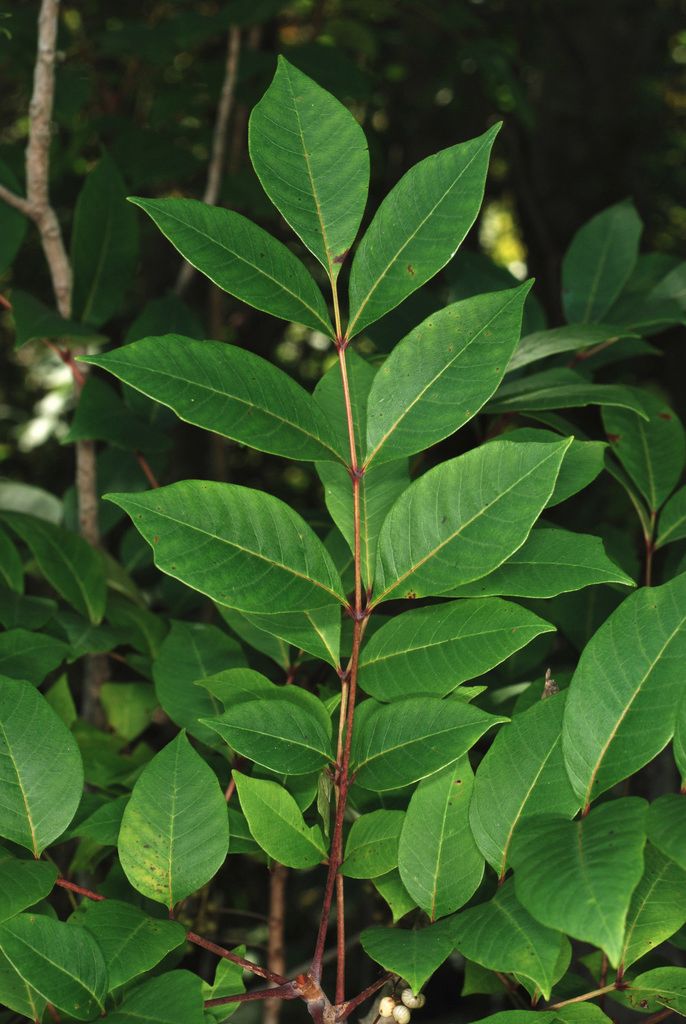
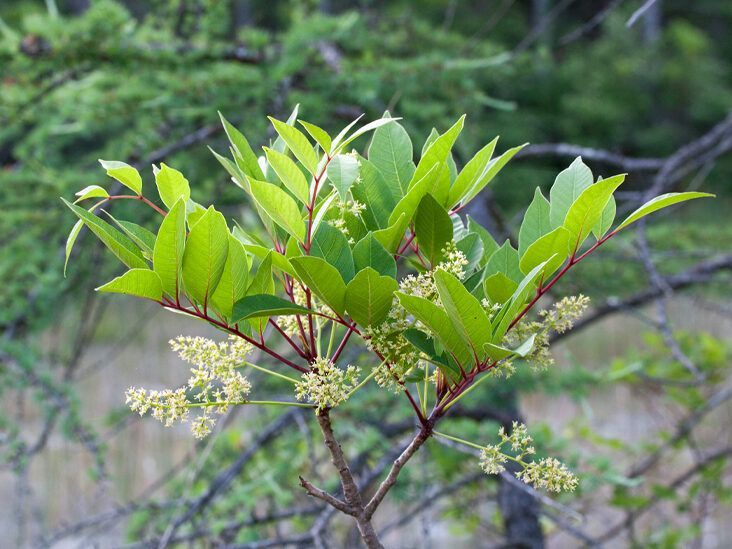
- Pinnately compound leaves with 7–13 smooth-margined (entire), glossy leaflets
- Leaf rachis and leaflet stalks distinctly dark red to maroon
- Tall deciduous shrub or small tree, 3–7.5 m (10–25 ft)
- Smooth grey-brown bark with prominent lenticels
- White to grey-white drooping drupes in loose clusters — key ID vs. non-toxic sumacs which have red upright fruit clusters
- Clear sap blackens on exposure to air
- Open, upright crown with few branches
Habitat
Exclusively wet, acidic habitats: swamps, bogs, marshes, and riverbanks. Does not grow on dry upland sites.
Notes
Considered one of the most toxic plants in North America — urushiol concentration is higher than in poison ivy. Distinguished from non-toxic sumacs (Rhus spp.) by smooth leaflet margins (no teeth), white drooping fruit (vs. red upright cones), and exclusive wetland habitat. The common name 'sumac' causes confusion with harmless staghorn sumac (Rhus typhina), which grows in dry upland sites and has toothed leaflets and red fuzzy fruit.