Trillium grandiflorum
Trillium from Latin tri- (three) or Swedish trilling (triplet), referring to the parts in threes — 3 leaves, 3 petals, 3 sepals. grandiflorum from Latin grandis (large) + flos (flower), meaning 'large-flowered.'
Great White Trillium
Melanthiaceae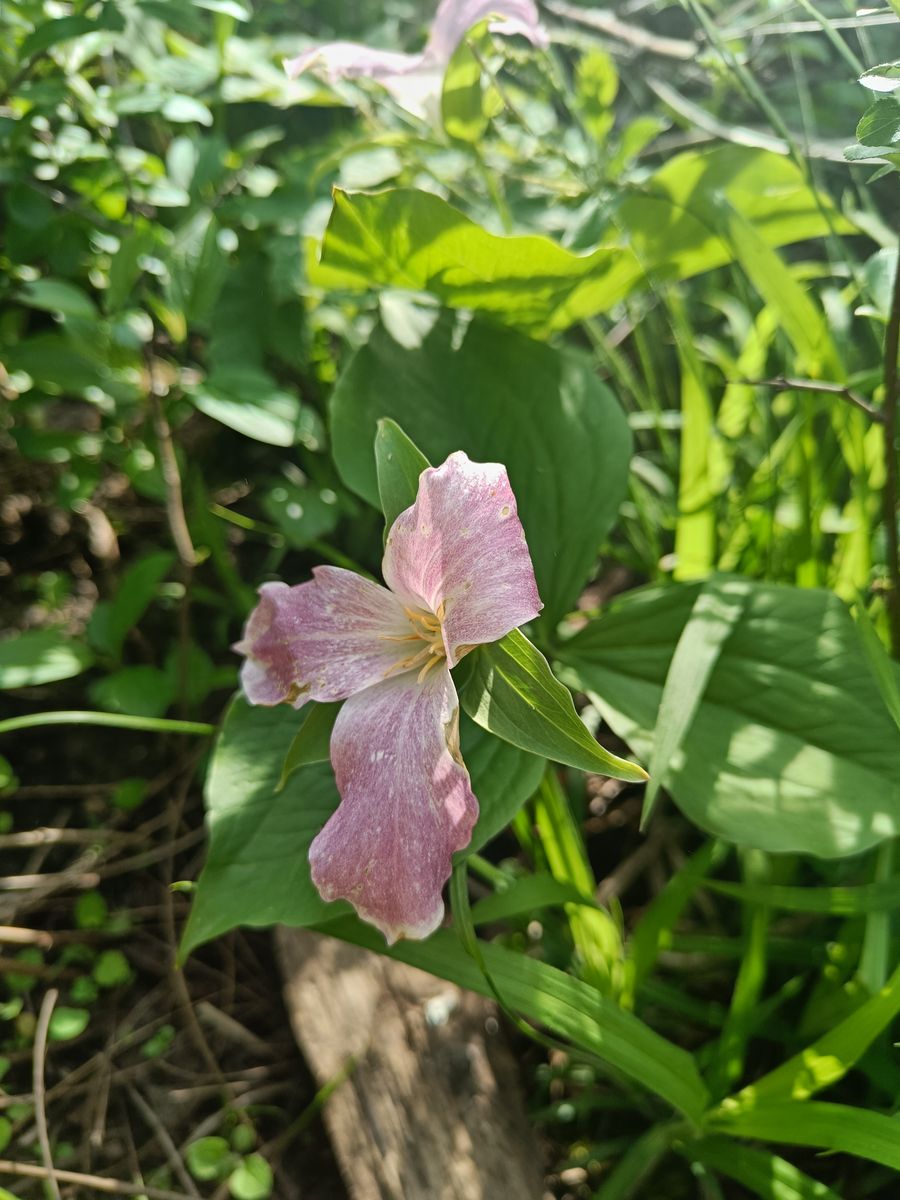
Distinguishing Features
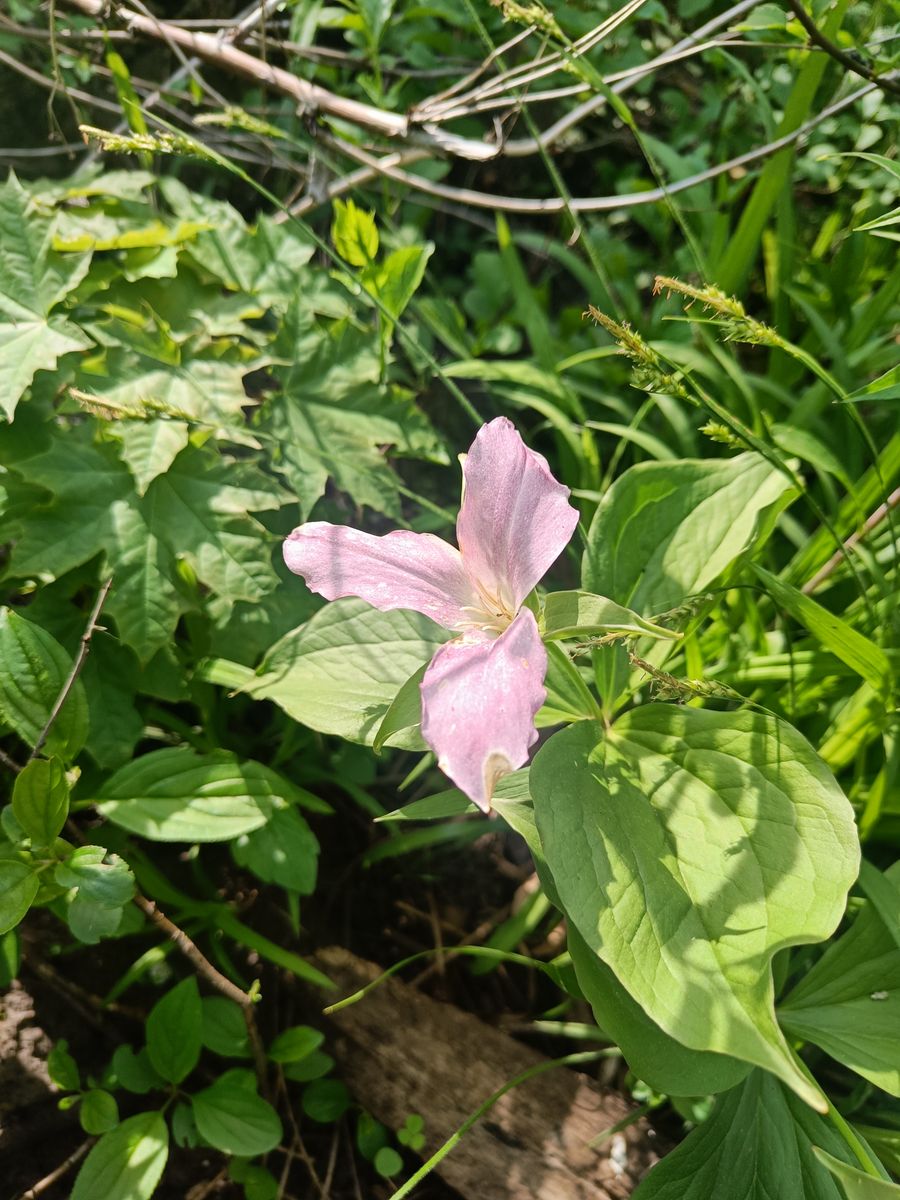
- Three large, pure white petals that age to pink or rose as the flower matures
- Three broad, sessile, net-veined leaves in a single whorl at the top of the stem
- Single erect flower on a short pedicel above the leaf whorl; 3 green sepals
- Petals large (4–9 cm long), broadly ovate, undulate margins
- Stem unbranched, smooth, arising from a rhizome; 20–45 cm tall
- Fruit a 6-angled berry, green ripening to purplish-black
- Requires 7+ years to flower from seed; very slow to recover from picking or trampling
Habitat
Rich, moist deciduous forest understories, particularly in sugar maple and beech forests on well-drained to moist soils. Often on north-facing slopes and ravine edges in Ontario.
Notes
The official wildflower emblem of Ontario. Picking the flower removes the only leaves and can kill the plant or set it back years. Protected under Ontario's provincial parks legislation. Flowers turn pink to rose as they age. Populations are threatened by white-tailed deer browse and garlic mustard invasion. Seeds dispersed by ants (myrmecochory).