Vincetoxicum rossicum
Vincetoxicum from Latin vincere (to conquer) + toxicum (poison), meaning 'poison-conqueror' — from the historical belief that the plant was an antidote to poison. rossicum from Latin Rossicus (Russian), referring to its origin in Ukraine and Russia.
Dog-strangling Vine
Apocynaceae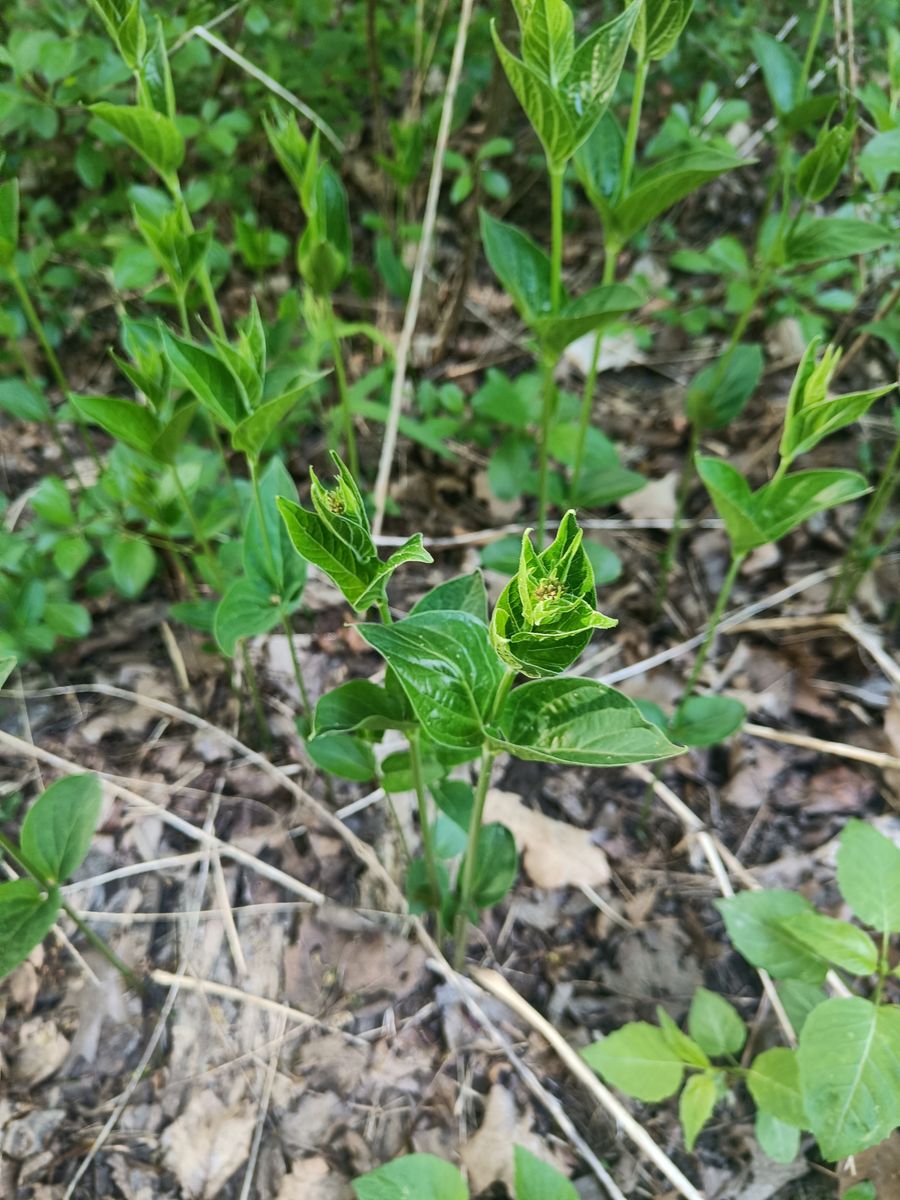
Distinguishing Features
- Twining herbaceous vine, 1–2 m, stems die back to rootstock each winter
- Leaves opposite, ovate to broadly lanceolate, smooth, with pointed tips and prominent midrib
- Flowers small (6–9 mm), star-shaped, 5 pink to pale purplish-pink petals with a central corona; in clusters from leaf axils
- Pods (follicles) elongated, 4–7 cm, splitting to release seeds with silky white hairs (pappus) for wind dispersal — milkweed-like
- Milky sap when stems broken
- Twines over and smothers neighbouring vegetation; stems often form dense tangled masses
Habitat
Forest edges, thickets, roadsides, meadows, alvars, disturbed areas, and lakeshores. Thrives in partial shade to full sun. Particularly problematic along the north shore of Lake Ontario and in the Carolinian zone.
Notes
Also commonly called Pale Swallowwort. Forms dense monocultures that crowd out native vegetation. Milkweed monarch butterflies mistakenly lay eggs on it; larvae cannot complete development and die — an ecological trap. Toxic to livestock and potentially humans. Listed as a noxious weed in Ontario. Extremely difficult to control due to deep rootstock and prolific wind-dispersed seeds.