Actaea pachypoda
Actaea from Greek aktaia (elder tree), used by Pliny for a plant with similar leaves. pachypoda from Greek pachys (thick) + pous (foot), referring to the distinctively thickened red fruiting stalks.
White Baneberry
Ranunculaceae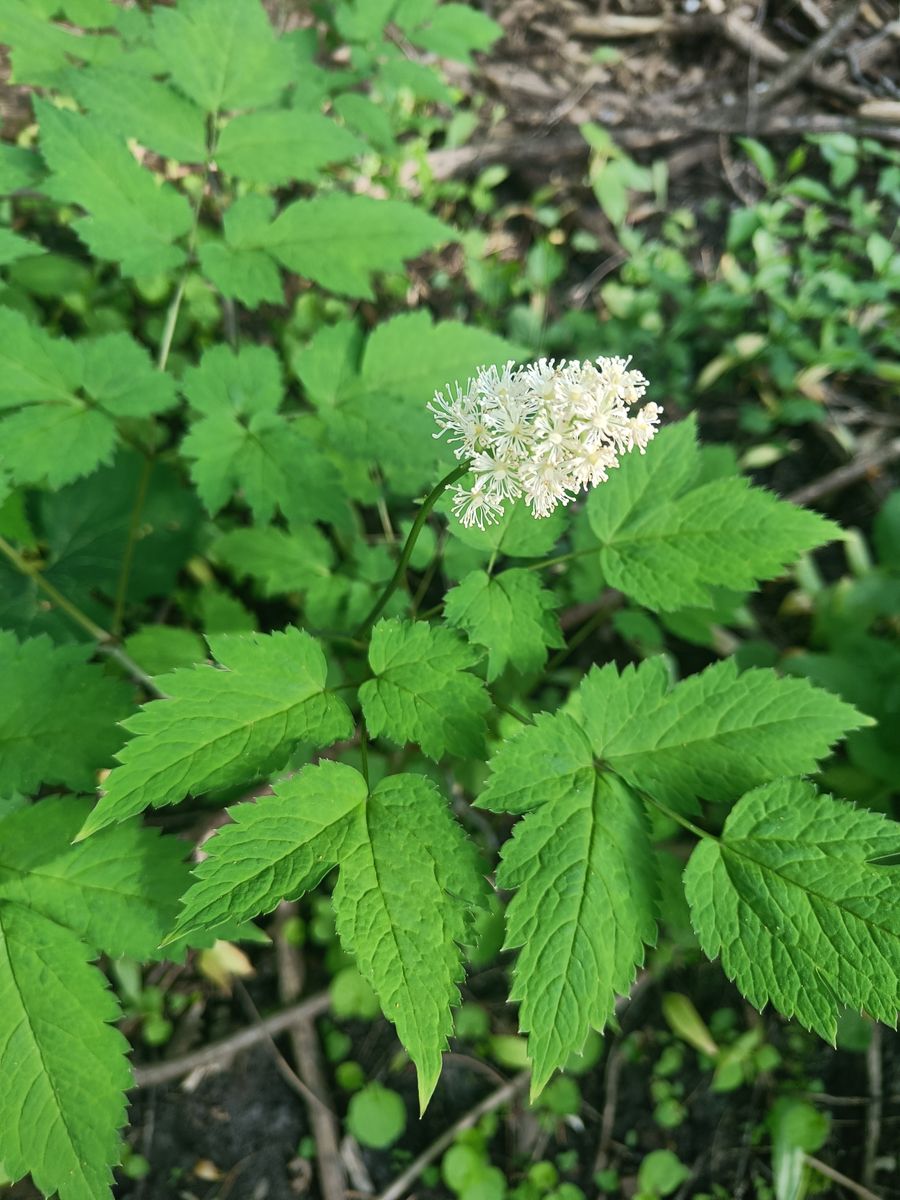
Distinguishing Features
- Berries white (occasionally red) with a conspicuous dark purple-black dot at the tip, giving a 'doll's-eye' appearance — unmistakable
- Fruiting stalk (pedicel) becomes thick and red at maturity (pachypoda = thick-footed)
- Leaves 2–3 times ternately compound with sharply toothed leaflets
- Small white flowers in an oblong raceme; petals spatulate, falling quickly; stamens prominent
- Robust herbaceous perennial, 40–80 cm tall
- Compare with Red Baneberry (A. rubra): red berries on slender pedicels; both are equally toxic
Habitat
Rich, moist deciduous forest understories, particularly on calcareous or mesic soils; ravines, north-facing slopes, and floodplain forests in Ontario and the Great Lakes region.
Notes
Also called Doll's Eyes, referring to the distinctive white berries with a dark eye. All parts are highly toxic, especially the berries. Even a few berries can cause cardiac arrest in humans due to cardiogenic toxins. Berries are toxic to mammals but reportedly consumed by some birds without harm. Do not confuse with edible white-berried plants.