Alliaria petiolata
Alliaria from Latin allium (garlic), referring to the garlic scent of crushed leaves. petiolata from Latin petiolus (leaf stalk), meaning 'having petioles' — referring to the distinctly stalked leaves.
Garlic Mustard
Brassicaceae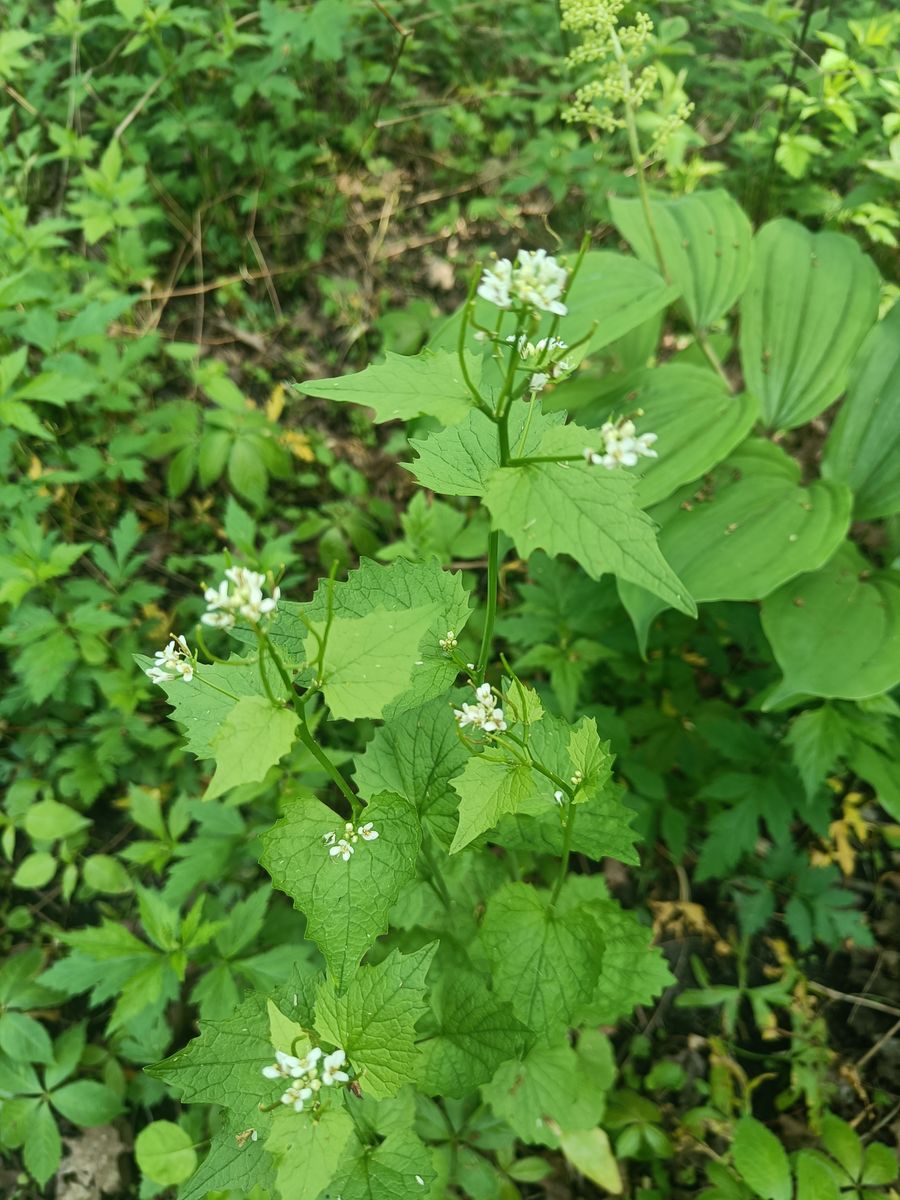
Distinguishing Features
- Strong garlic odour when leaves are crushed — the most reliable field ID
- Biennial: first-year rosette of kidney-shaped, scallop-edged leaves; second-year plant has triangular-toothed stem leaves and grows 30–100 cm tall
- Small white 4-petalled flowers in dense clusters (racemes) at stem tips, typical Brassicaceae cross shape
- Fruits: long narrow siliques (3–6 cm), erect, held close to stem
- Stem leaves triangular to cordate-acuminate with coarsely toothed margins
- Flowers very early in spring before most native wildflowers
Habitat
Forest understories, forest edges, roadsides, floodplains, and disturbed shaded areas. One of the few invasive plants that thrives in intact forest interior. Particularly aggressive in riparian areas.
Notes
One of the most ecologically damaging invasive plants in eastern North American forests. Produces allelopathic compounds that disrupt mycorrhizal fungi, undermining native tree seedling establishment. A single plant can produce hundreds of seeds that remain viable in soil for 5+ years. Edible (leaves in salads, pesto) but harvesting should only be done from invaded populations.