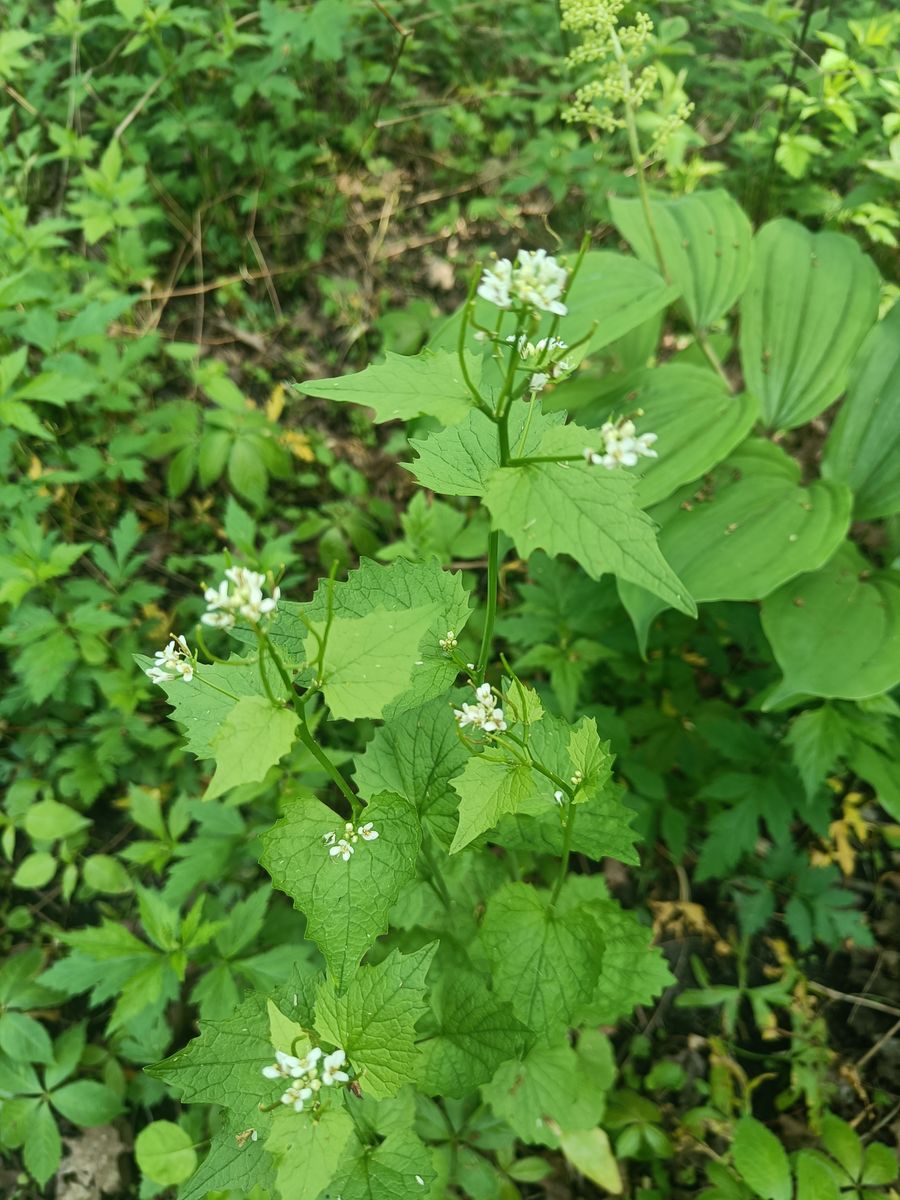
Brassicaceae
Mustard Family
Order: Brassicales ~372 genera, ~4,060 speciesDefining Characteristics
- 4 petals arranged in a cross (cruciform), giving the former name Cruciferae
- 6 stamens: 4 long (tetradynamous) and 2 short
- Glucosinolates (mustard oil glycosides) producing pungent flavor when broken down
- Fruit a silique (elongated) or silicle (short, wide), a dry dehiscent capsule with a false septum (replum)
- 4 sepals in 2 pairs
- Often alternate, simple to pinnately lobed leaves
Notable Genera
- Brassica (cabbage, mustard, broccoli, turnip, canola)
- Raphanus (radish)
- Arabidopsis (thale cress — model organism)
- Nasturtium / Rorippa (watercress)
- Alyssum (alyssum)
- Cardamine (bittercress)
Notes
Economically one of the most important plant families: Brassica alone provides cabbage, broccoli, cauliflower, kale, Brussels sprouts, turnip, and canola oil. Arabidopsis thaliana is the primary model organism in plant molecular genetics.