Myosotis scorpioides
Myosotis from Greek mys (mouse) + ous (ear), meaning 'mouse ear' — referring to the shape of the small fuzzy leaves. scorpioides from Greek skorpios (scorpion) + -oides (resembling), referring to the coiled flower cluster that unfurls like a scorpion's tail.
Water Forget-me-not
Boraginaceae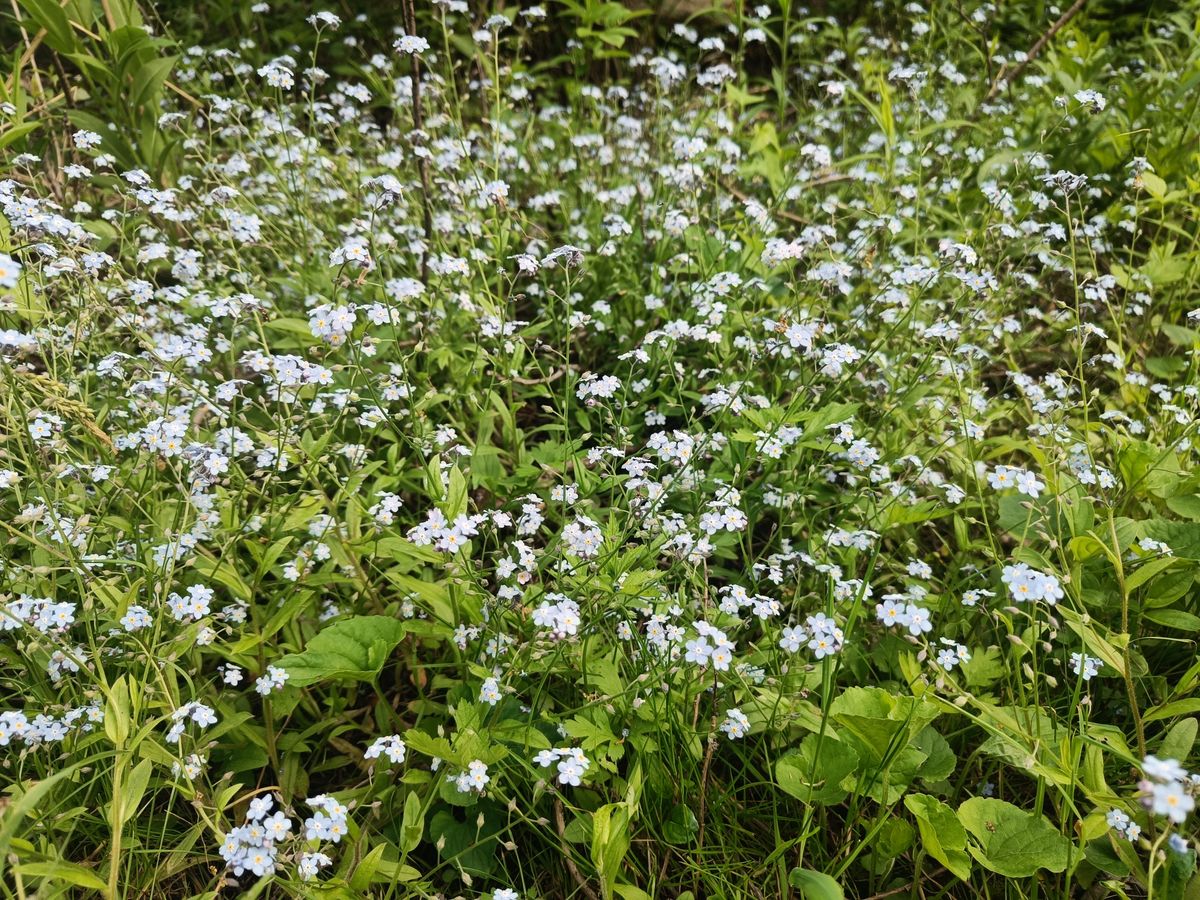
Distinguishing Features
- Sky-blue flowers, 5-petalled with a yellow central eye, very small (8–10 mm diameter)
- Flowers in scorpioid cymes (coiled like a scorpion's tail when in bud, uncoiling as flowers open) — family-level character
- Stems low and spreading to ascending, 15–45 cm, rooting at nodes when in contact with mud or water
- Leaves alternate, oblong to spatulate, covered in appressed hairs; stem leaves sessile
- Calyx lobes covered in hooked hairs (important in distinguishing from similar species)
- Perennial; often forms dense mats at water's edge
Habitat
Margins of streams, ponds, ditches, marshes, and wet meadows; prefers shallow, slow-moving or standing water with muddy banks. Common near water throughout Ontario and the Great Lakes region.
Notes
Naturalized from Europe but not considered aggressively invasive in the same category as buckthorn or dog-strangling vine. Often planted deliberately in water gardens. The generic name Myosotis means 'mouse ear' referring to the shape and feel of the leaves. The scorpioid cyme inflorescence is a diagnostic family (Boraginaceae) feature. Native look-alikes include M. laxa (smaller flowers) and M. stricta (annual).